Travers Solar – more than Canada’s largest solar project
Travers Solar is Canada’s largest solar project, with a capacity of 465 MW, located near Lomond, Alberta. But it is also a financial stabilizer for Yetwood Farms. Eric Steeves walked me through the site, explaining how solar became a new source of stability on land shaped by drought, wind and uncertain agricultural returns.
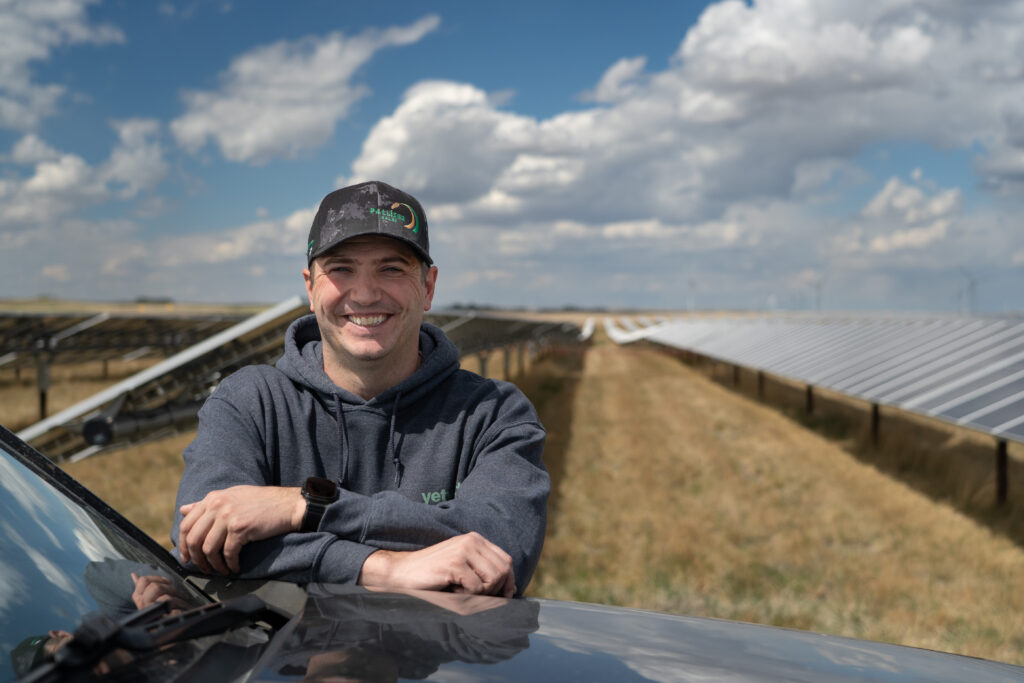
I had driven more around 300 kilometres from Canmore to see Canada’s largest solar project in Travers, Alberta. I expected to talk about panels, power prices and the role of corporate electricity buyers in building new renewable energy. Instead, I found myself standing in a barn, surrounded by lambs, talking to a 5th generation farmer, Eric Steeves, about land values, drought and farm succession. Then he said something that changed the way I was looking at the project. “The solar project saved our family farm.” Travers Solar is a major power project, but here it is also a financial stabilizer.
The same land that is hard to farm can be valuable for power
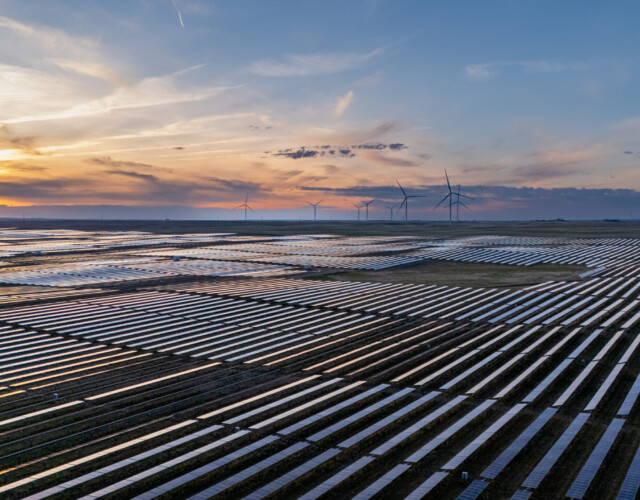
Travers Solar sits on roughly 3,300 acres in Vulcan County, south of Lomond, where heat, wind and drought are part of the farming reality. Those same conditions make the area well suited to solar generation. The 465-megawatt project was originally developed by Greengate Power, acquired by Copenhagen Infrastructure Partners, and supported by a 15-year power purchase agreement under which Amazon agreed to buy 400 megawatts of output. The project was developed here to benefit from one of the top solar resources in North America and to satisfy Amazon’s renewable energy targets.
“The solar project saved our family farm”
Eric Steeves
President – Yetwood Farms
Solar changed the farming operation, but it did not end farming on the land.
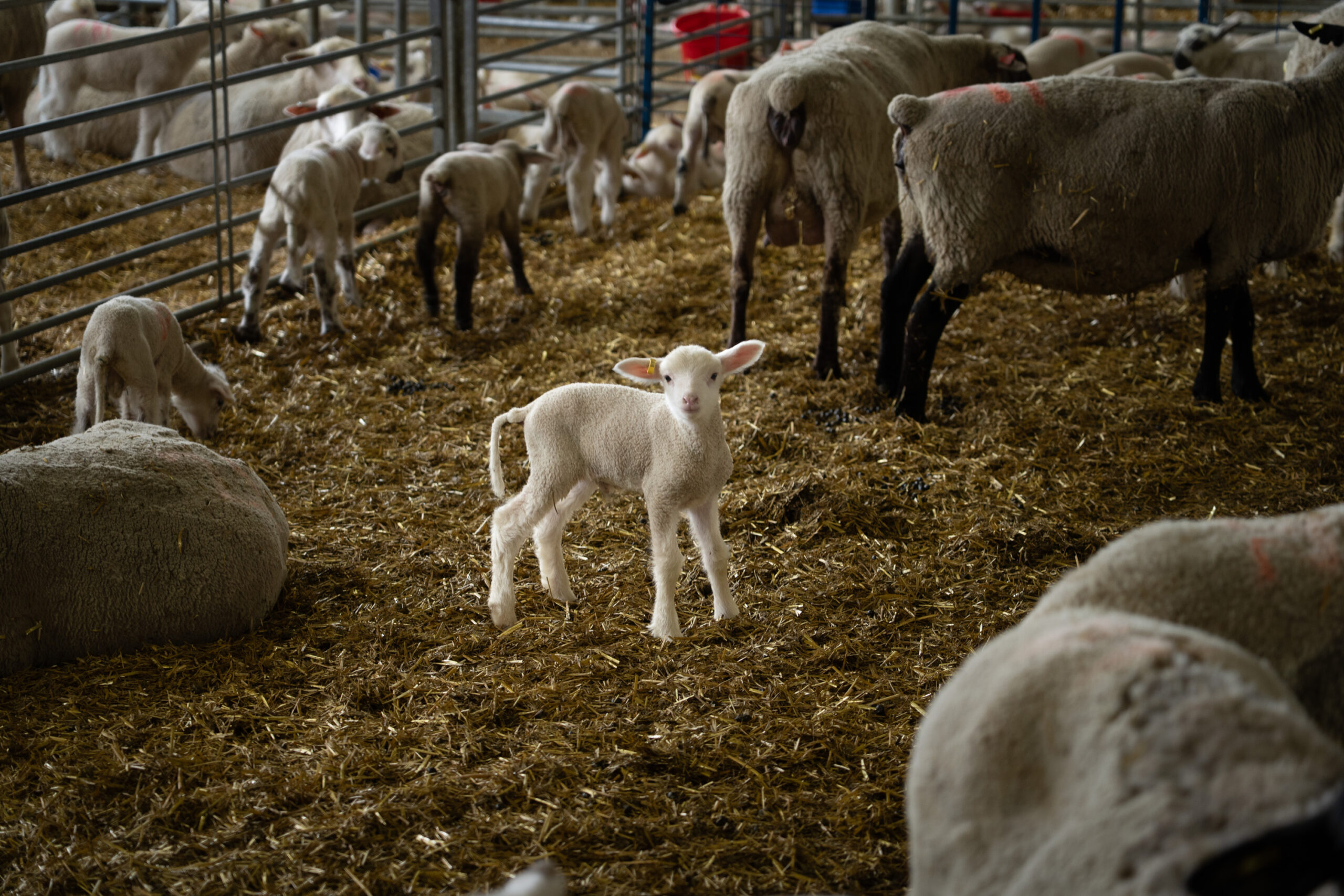
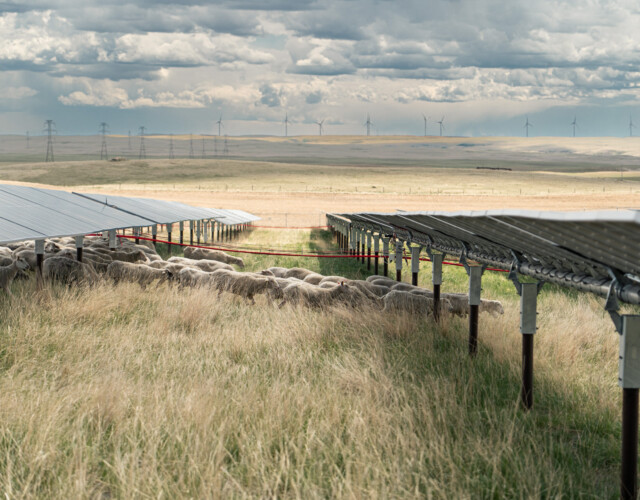
For Steeves, the solar lease created stable annual income in a business where returns can be uncertain and land values can make succession difficult. He described farmland worth far more on sale than it can justify through farm production alone. But the project also changed what agriculture could happen there. More than 3,000 sheep now graze beneath the panels, providing vegetation control and another income stream. Steeves said shade from the panels helps hold moisture and increased grazing productivity, allowing two to two-and-a-half times more sheep than expected.
Travers Solar near Lomond, Alberta, is a 465 MW solar project covering roughly 3,300 acres in Vulcan County. Opened in 2022, the CAD 700 million project is backed by a 15-year Amazon agreement for 400 MW of output. More than 3,000 sheep graze beneath the panels, while CAD 700–900 per acre lease payments helped stabilize the Steeves family farm, Yetwood Farms.
Travers Solar near Lomond, Alberta, is a 465 MW solar project covering roughly 3,300 acres in Vulcan County. Opened in 2022, the CAD 700 million project is backed by a 15-year Amazon agreement for 400 MW of output. More than 3,000 sheep graze beneath the panels, while CAD 700–900 per acre lease payments helped stabilize the Steeves family farm, Yetwood Farms.
Travers Solar near Lomond, Alberta, is a 465 MW solar project covering roughly 3,300 acres in Vulcan County. Opened in 2022, the CAD 700 million project is backed by a 15-year Amazon agreement for 400 MW of output. More than 3,000 sheep graze beneath the panels, while CAD 700–900 per acre lease payments helped stabilize the Steeves family farm, Yetwood Farms.
Travers Solar near Lomond, Alberta, is a 465 MW solar project covering roughly 3,300 acres in Vulcan County. Opened in 2022, the CAD 700 million project is backed by a 15-year Amazon agreement for 400 MW of output. More than 3,000 sheep graze beneath the panels, while CAD 700–900 per acre lease payments helped stabilize the Steeves family farm, Yetwood Farms.
Travers Solar near Lomond, Alberta, is a 465 MW solar project covering roughly 3,300 acres in Vulcan County. Opened in 2022, the CAD 700 million project is backed by a 15-year Amazon agreement for 400 MW of output. More than 3,000 sheep graze beneath the panels, while CAD 700–900 per acre lease payments helped stabilize the Steeves family farm, Yetwood Farms.
Travers Solar near Lomond, Alberta, is a 465 MW solar project covering roughly 3,300 acres in Vulcan County. Opened in 2022, the CAD 700 million project is backed by a 15-year Amazon agreement for 400 MW of output. More than 3,000 sheep graze beneath the panels, while CAD 700–900 per acre lease payments helped stabilize the Steeves family farm, Yetwood Farms.
Travers Solar near Lomond, Alberta, is a 465 MW solar project covering roughly 3,300 acres in Vulcan County. Opened in 2022, the CAD 700 million project is backed by a 15-year Amazon agreement for 400 MW of output. More than 3,000 sheep graze beneath the panels, while CAD 700–900 per acre lease payments helped stabilize the Steeves family farm, Yetwood Farms.
Travers Solar near Lomond, Alberta, is a 465 MW solar project covering roughly 3,300 acres in Vulcan County. Opened in 2022, the CAD 700 million project is backed by a 15-year Amazon agreement for 400 MW of output. More than 3,000 sheep graze beneath the panels, while CAD 700–900 per acre lease payments helped stabilize the Steeves family farm, Yetwood Farms.
Travers Solar near Lomond, Alberta, is a 465 MW solar project covering roughly 3,300 acres in Vulcan County. Opened in 2022, the CAD 700 million project is backed by a 15-year Amazon agreement for 400 MW of output. More than 3,000 sheep graze beneath the panels, while CAD 700–900 per acre lease payments helped stabilize the Steeves family farm, Yetwood Farms.
Travers Solar near Lomond, Alberta, is a 465 MW solar project covering roughly 3,300 acres in Vulcan County. Opened in 2022, the CAD 700 million project is backed by a 15-year Amazon agreement for 400 MW of output. More than 3,000 sheep graze beneath the panels, while CAD 700–900 per acre lease payments helped stabilize the Steeves family farm, Yetwood Farms.
Travers Solar near Lomond, Alberta, is a 465 MW solar project covering roughly 3,300 acres in Vulcan County. Opened in 2022, the CAD 700 million project is backed by a 15-year Amazon agreement for 400 MW of output. More than 3,000 sheep graze beneath the panels, while CAD 700–900 per acre lease payments helped stabilize the Steeves family farm, Yetwood Farms.
Travers Solar near Lomond, Alberta, is a 465 MW solar project covering roughly 3,300 acres in Vulcan County. Opened in 2022, the CAD 700 million project is backed by a 15-year Amazon agreement for 400 MW of output. More than 3,000 sheep graze beneath the panels, while CAD 700–900 per acre lease payments helped stabilize the Steeves family farm, Yetwood Farms.
Travers Solar near Lomond, Alberta, is a 465 MW solar project covering roughly 3,300 acres in Vulcan County. Opened in 2022, the CAD 700 million project is backed by a 15-year Amazon agreement for 400 MW of output. More than 3,000 sheep graze beneath the panels, while CAD 700–900 per acre lease payments helped stabilize the Steeves family farm, Yetwood Farms.
Travers Solar near Lomond, Alberta, is a 465 MW solar project covering roughly 3,300 acres in Vulcan County. Opened in 2022, the CAD 700 million project is backed by a 15-year Amazon agreement for 400 MW of output. More than 3,000 sheep graze beneath the panels, while CAD 700–900 per acre lease payments helped stabilize the Steeves family farm, Yetwood Farms.
Agrivoltaics works best when farmers help design it from the start.
The sheep operation also revealed practical constraints. Sheep herding is a specialized skill, and Steeves said there was a learning curve requiring new staff familiar with sheep, which can be difficult to find in Alberta. Other agricultural uses, such as hay production, could be possible in future, but only if projects are designed differently: with wider spacing, underground infrastructure and layouts that account for farm equipment. Combining farming and solar development does not happen on its own. Farmers and project developers have to work together at the design stage. There are also trade-offs. Larger spacing between panels, for instance, requires more land for the solar project.
The Details
Lomond, Alberta
Location
2022
Year commissioned
700 million
Investment
700-900
Lease value per acre
3,300
Number of acres
3,000
Sheep supported
The next challenge is turning one farm’s success into wider local benefit
For Steeves, Travers has worked well enough that he now wants to extend the benefits beyond his own family farm. The solar lease helped stabilize the operation, the sheep created a new agricultural income stream, and the project showed that renewable energy could become part of a working farm.
Scaling that model will be harder. The region already has significant renewable energy development, and adding more generation will require new local demand, storage and careful grid integration. Steeves sees an opportunity in a data centre powered by solar, wind, storage and irrigation, with farming continuing around the energy projects. He estimates this could create 88 to 100 local jobs across the data centre, renewable operations and associated agricultural activity.
To get there, he will need to convince the local community, investors, and Alberta’s electricity institutions that the project can bring durable regional benefits while maintaining the integrity of the grid. It is a large undertaking, but it starts from a simple premise: Travers worked well enough for one family farm that Steeves now wants other farmers to share in the opportunity.