What moving up the value chain looks like at Kalesnikoff
At Kalesnikoff’s Castlegar facility, a family sawmill founded in 1940 has become a clean manufacturing story. By moving into mass timber and modular construction, the company is creating skilled jobs, adding value to B.C. wood, and showing how policy, investment and innovation can help grow lower-carbon building industries in Canada.
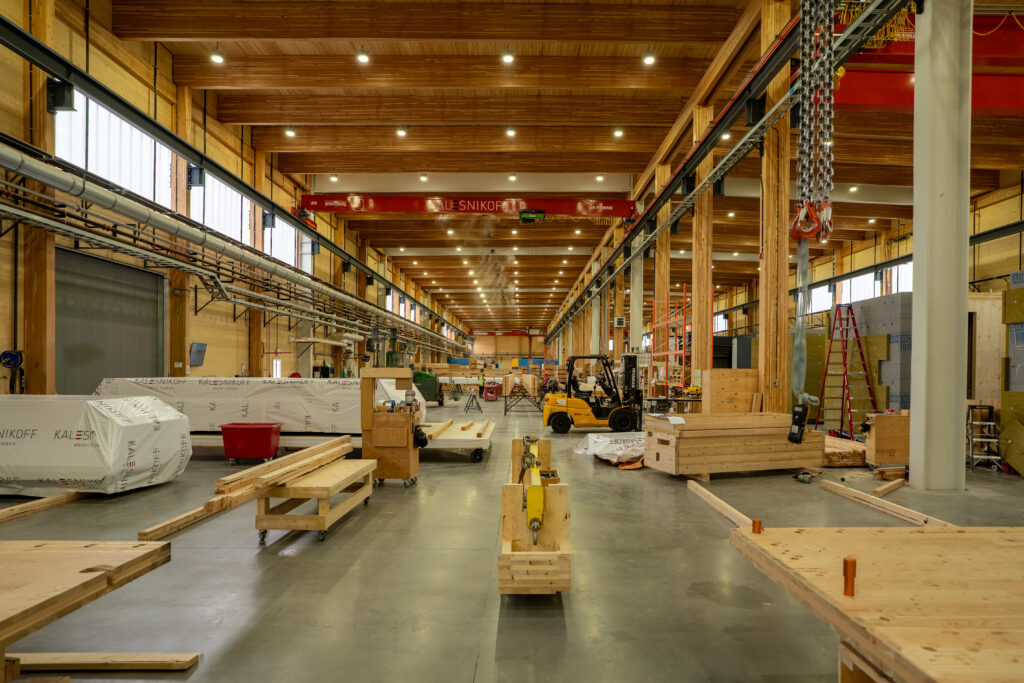
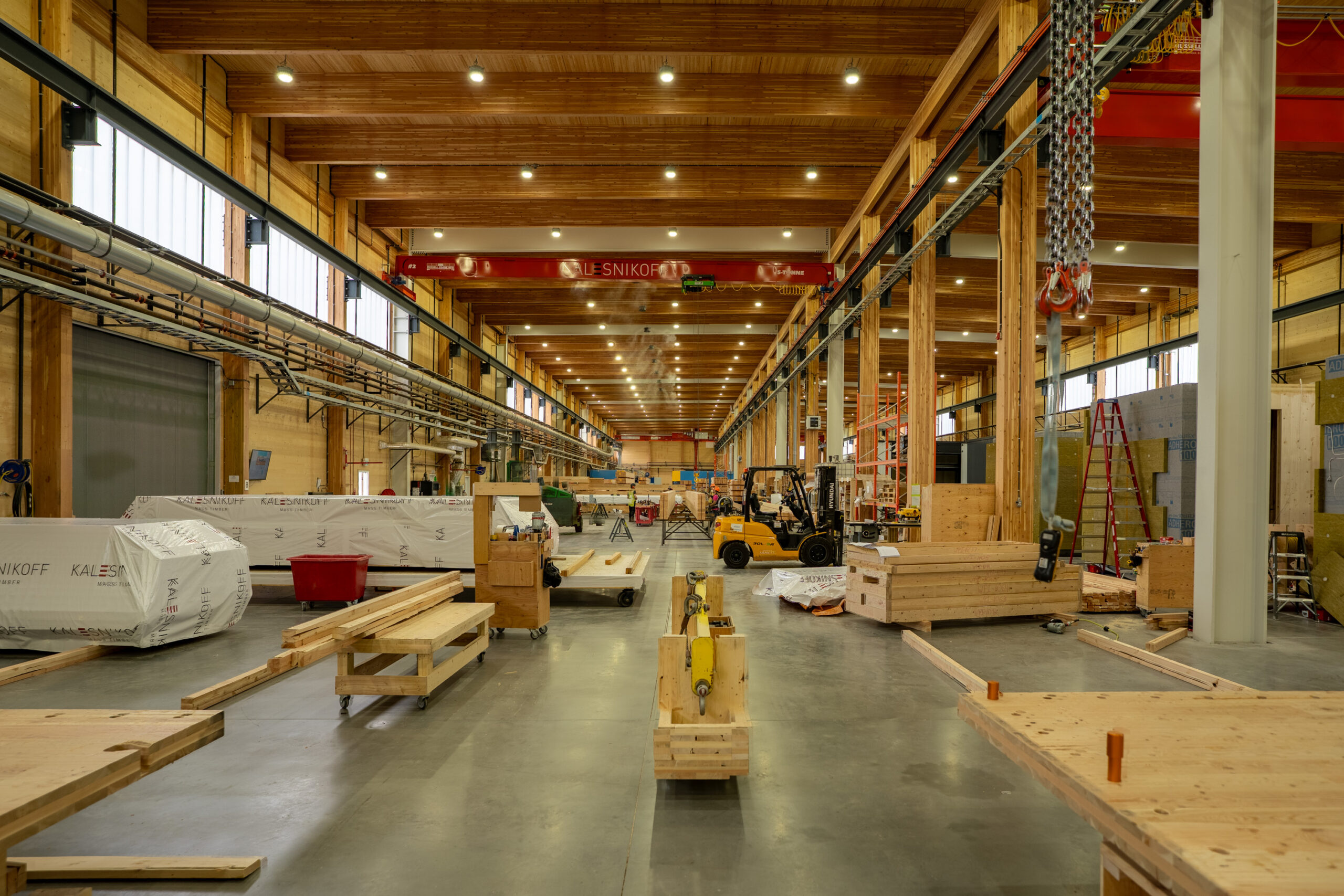
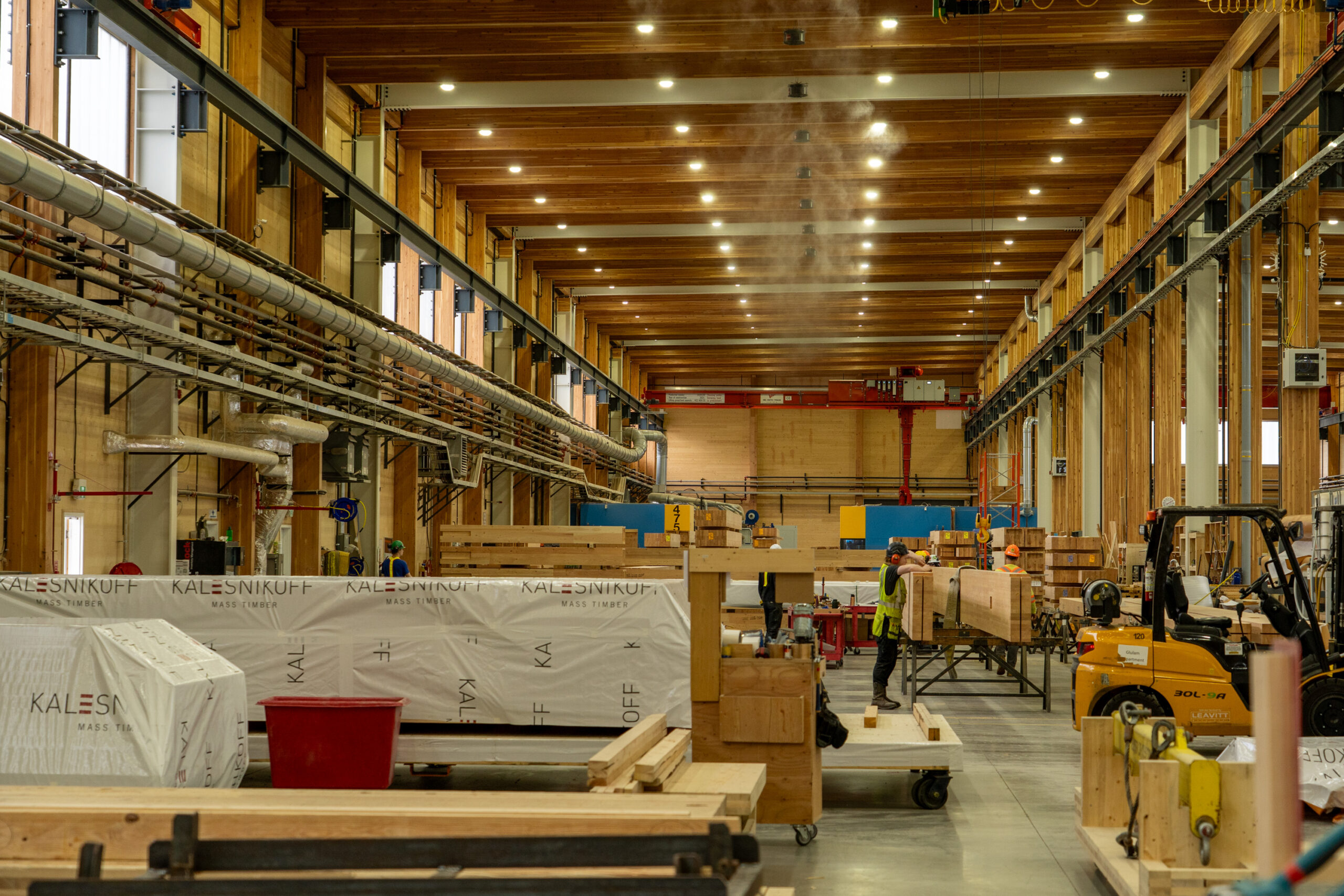
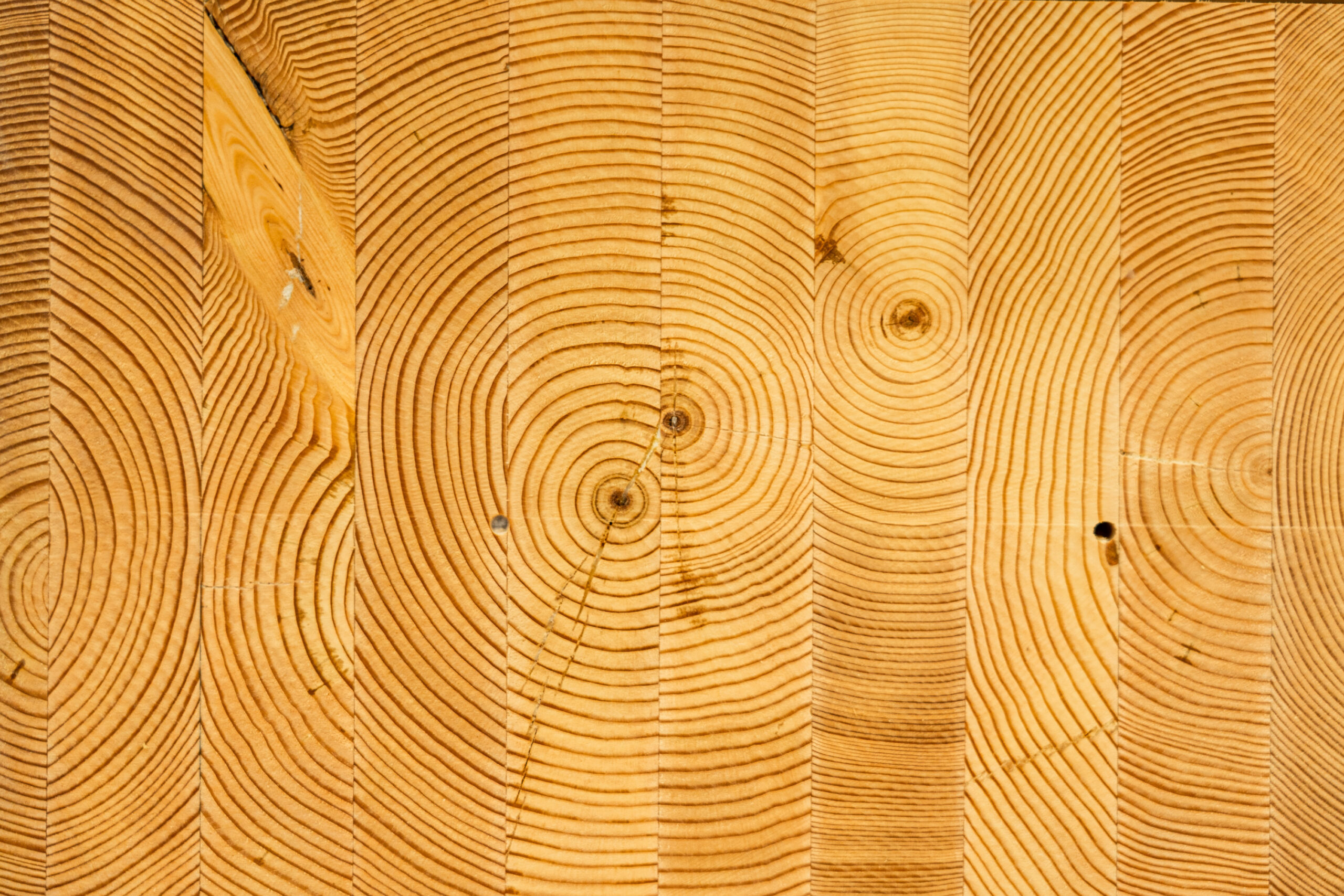
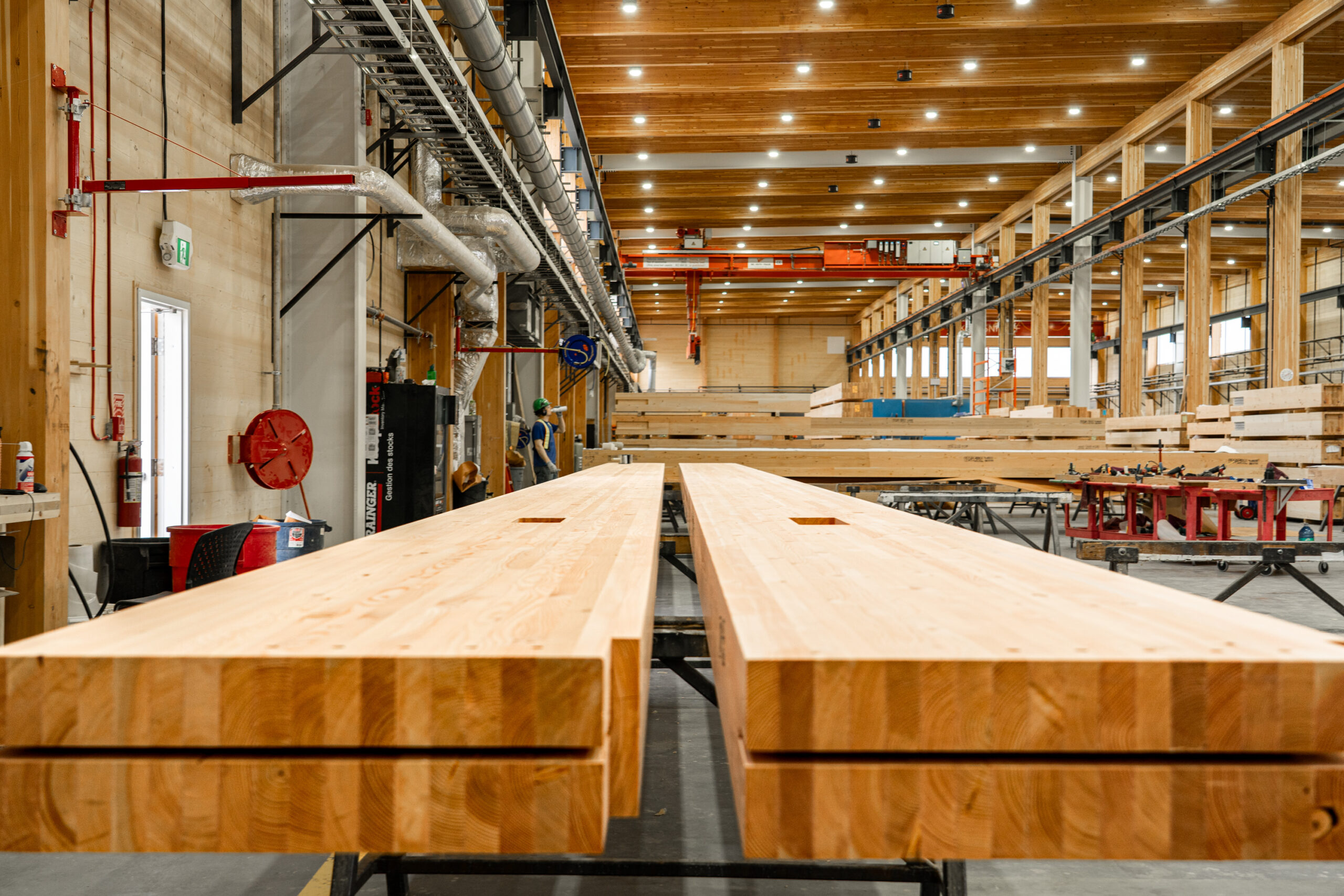
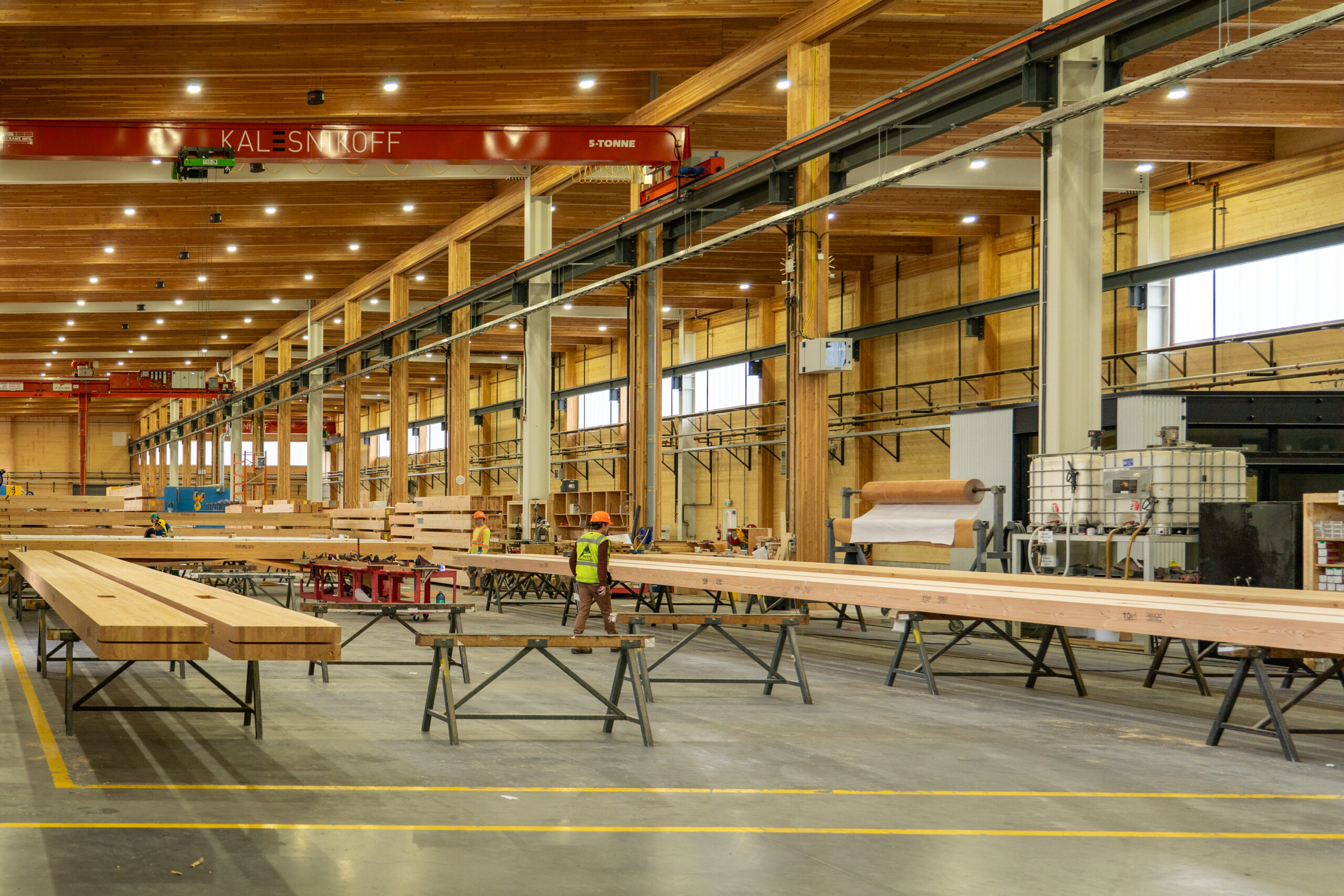
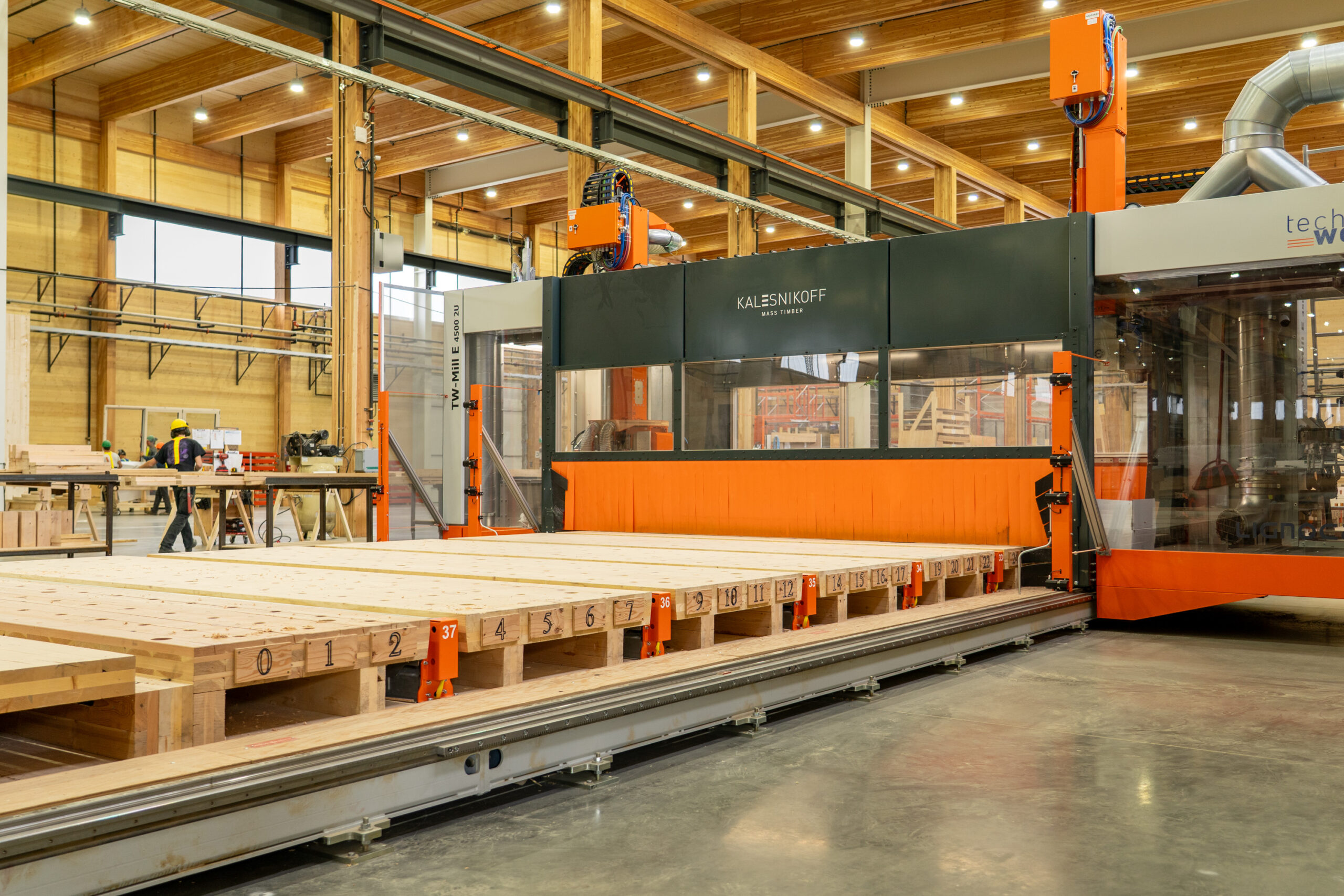
As I walk into Kalesnikoff’s Mass Timber Facility in Castlegar, my eyes move across an expansive, wood-framed, naturally lit space. To my right is a CNC machine, a computer-controlled tool the size of a cargo container that cuts wood components with precision. To my left, workers prepare large structural columns made from dozens of smaller pieces of wood.
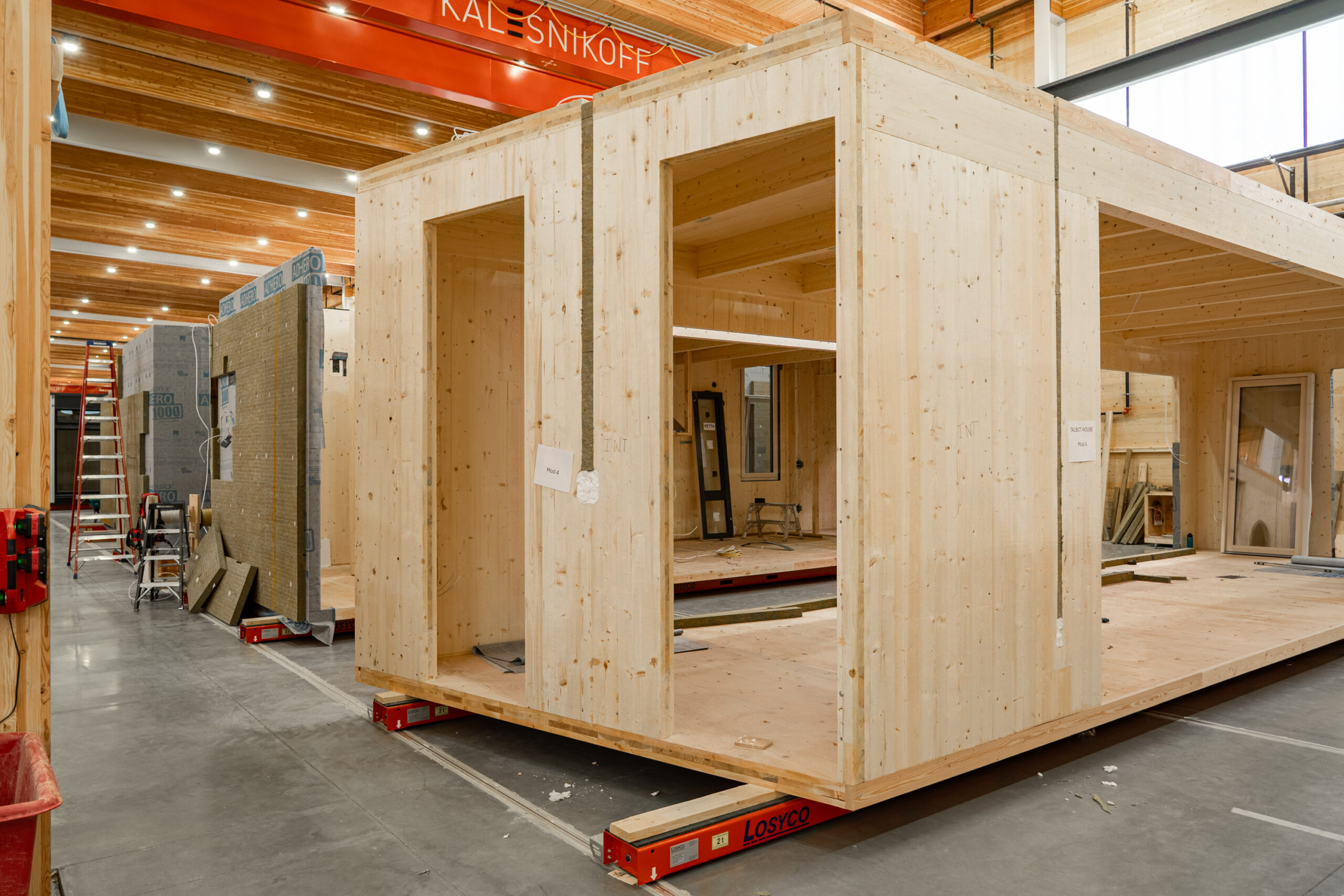
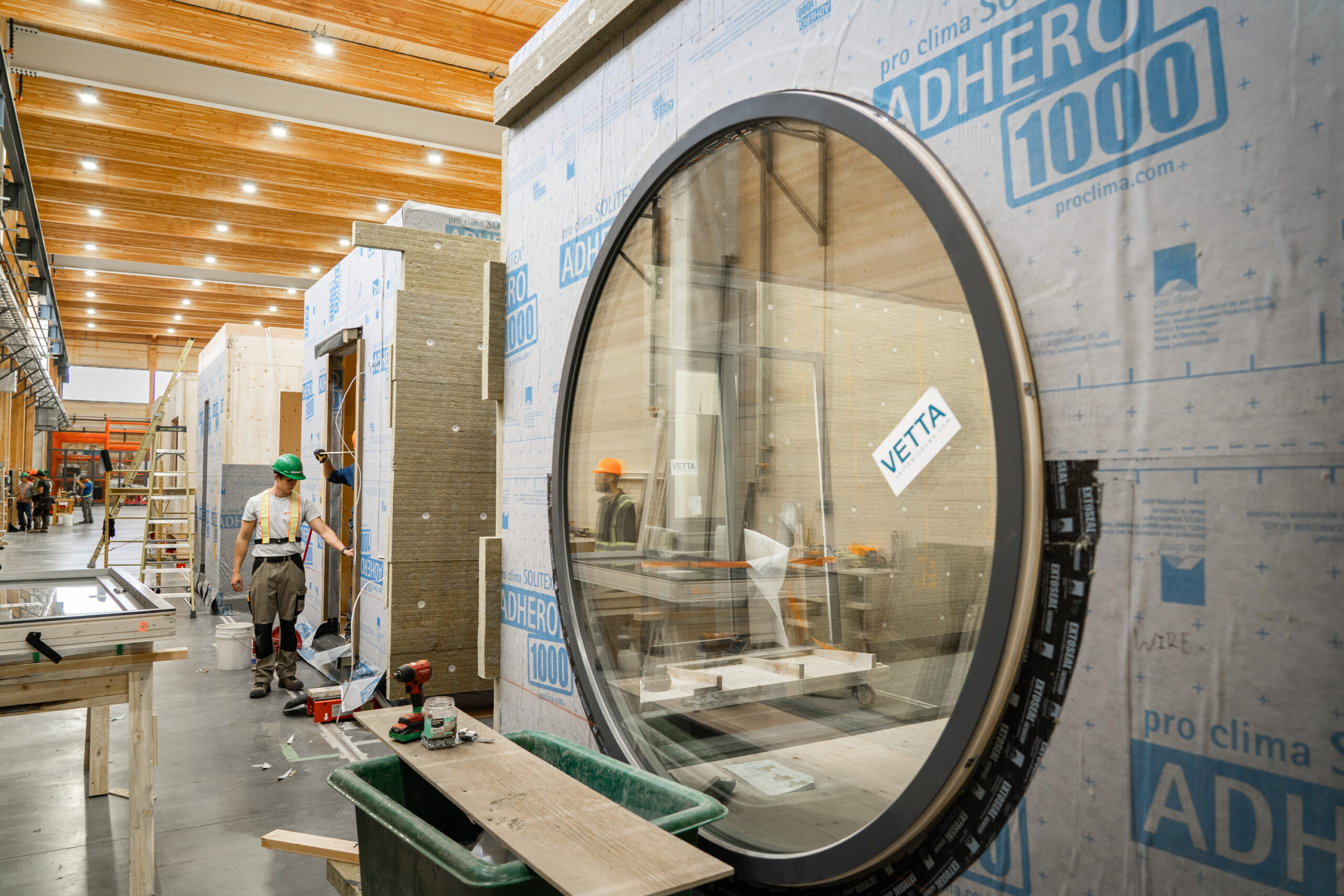
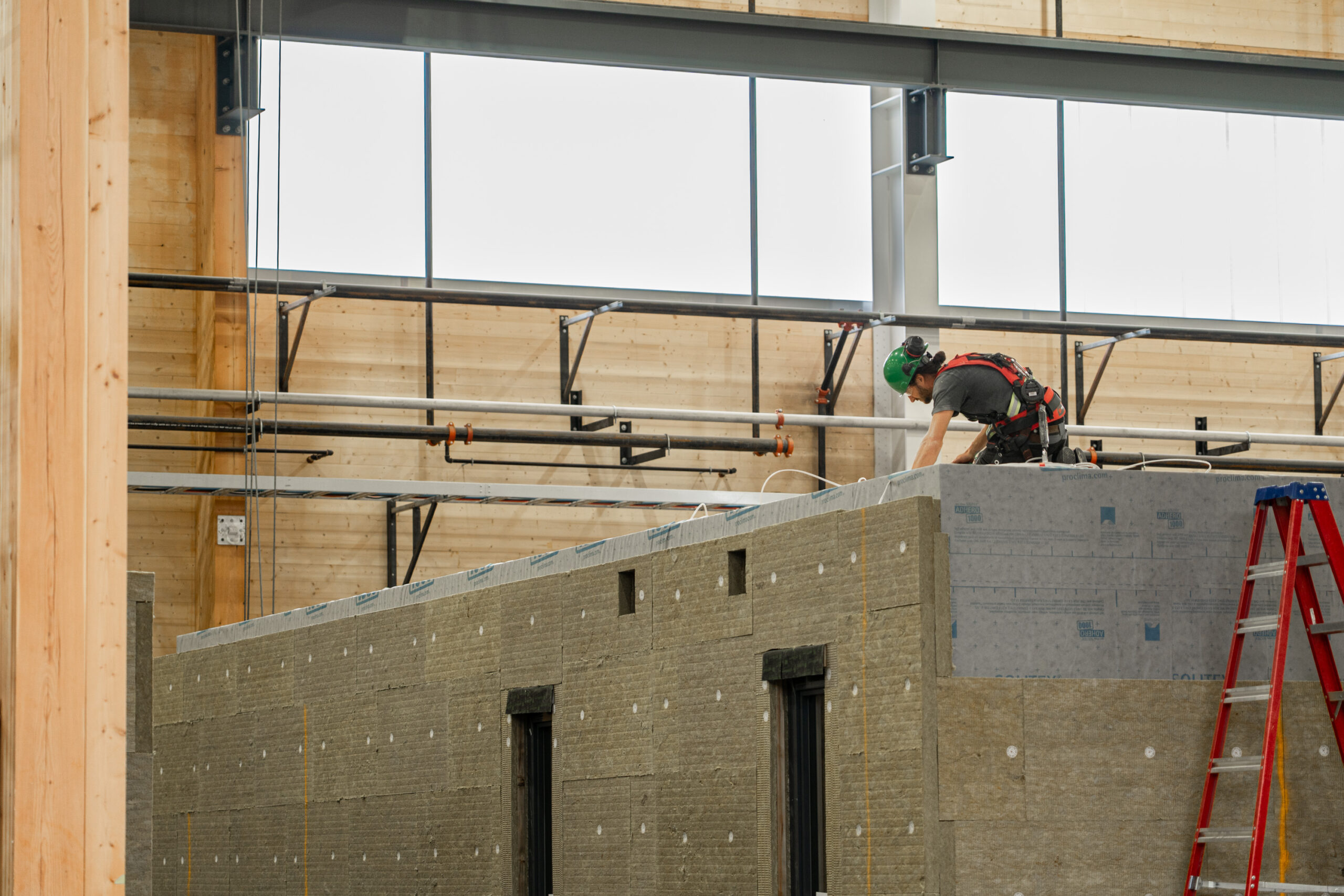
Across the room, full building modules move through a production line, from exposed frames to nearly finished units complete with stoves and refrigerators. Kalesnikoff is producing custom structural wood products, modular components and finished building systems. It has also created nearly 100 jobs, bringing income, technical skills and economic activity to the region. This is what moving up the value chain can look like in Canada.
The shift to mass timber was risky, but staying in commodity lumber was risky too
Kalesnikoff started its sawmill in 1940 near Castlegar and remains a family business, now led by CEO Chris Kalesnikoff. The company prospered as a specialist lumber supplier to domestic markets and export customers in the United States, Japan and Europe. But the mill has faced increasing competitive pressure from larger producers, volatile lumber markets, tariffs and declining timber availability.
Mass timber offered a way to build on what Kalesnikoff already knew while moving into a higher-value market. But the shift required new equipment, new expertise, new customers and confidence that the market for larger wood buildings would expand.
Before making the leap, Kalesnikoff studied European plant designs, visited facilities and assessed technologies. The company ultimately invested $65 million across two major expansions: $35 million for its mass timber facility in South Slocan and $30 million for its K3 modular construction facility in Castlegar. Government support helped reduce the risk of the Castlegar expansion, including $3 million from Natural Resources Canada’s Investments in Forest Industry Transformation program and $6.7 million from British Columbia’s Manufacturing Jobs Fund, part of B.C.’s Mass Timber Strategy.
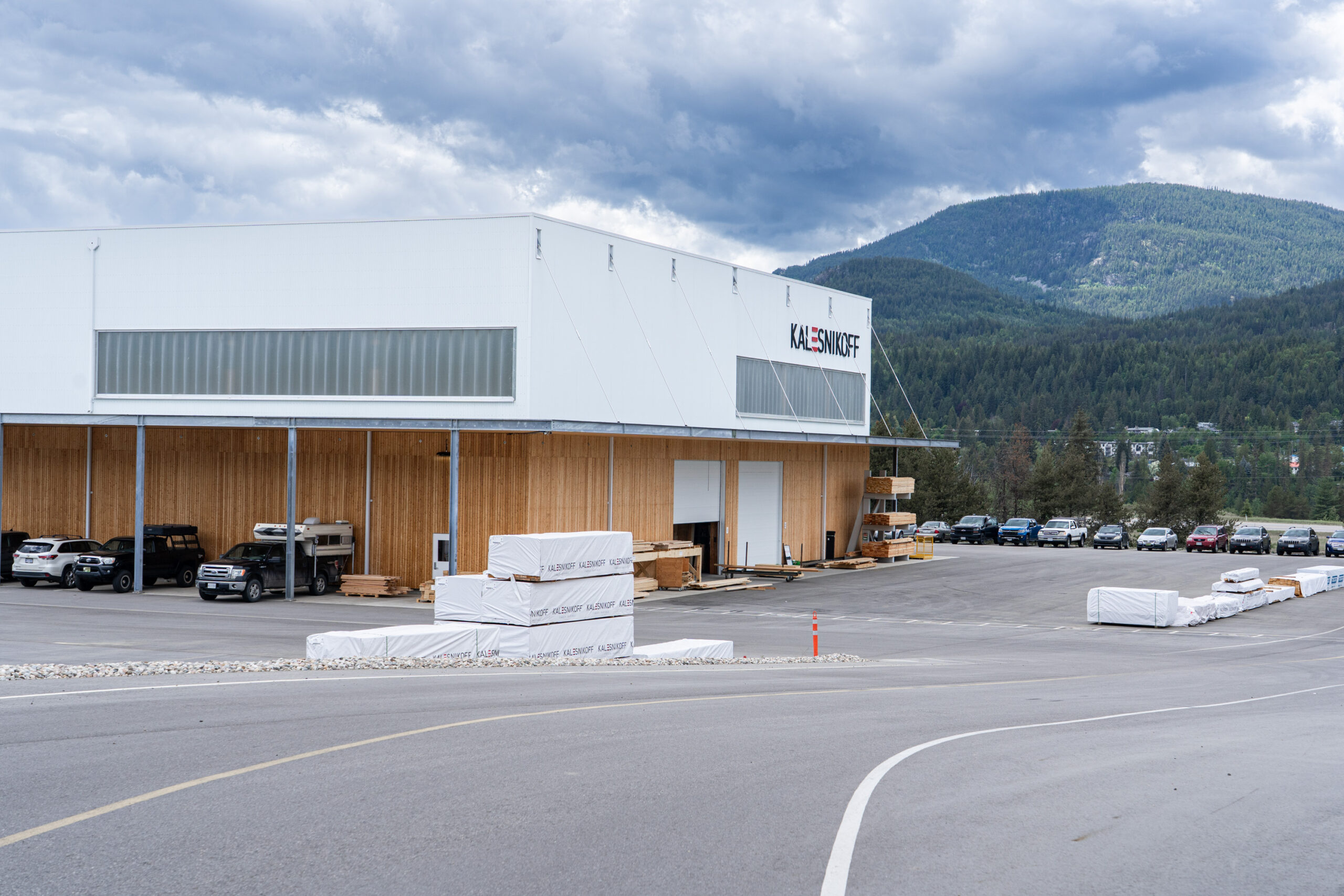
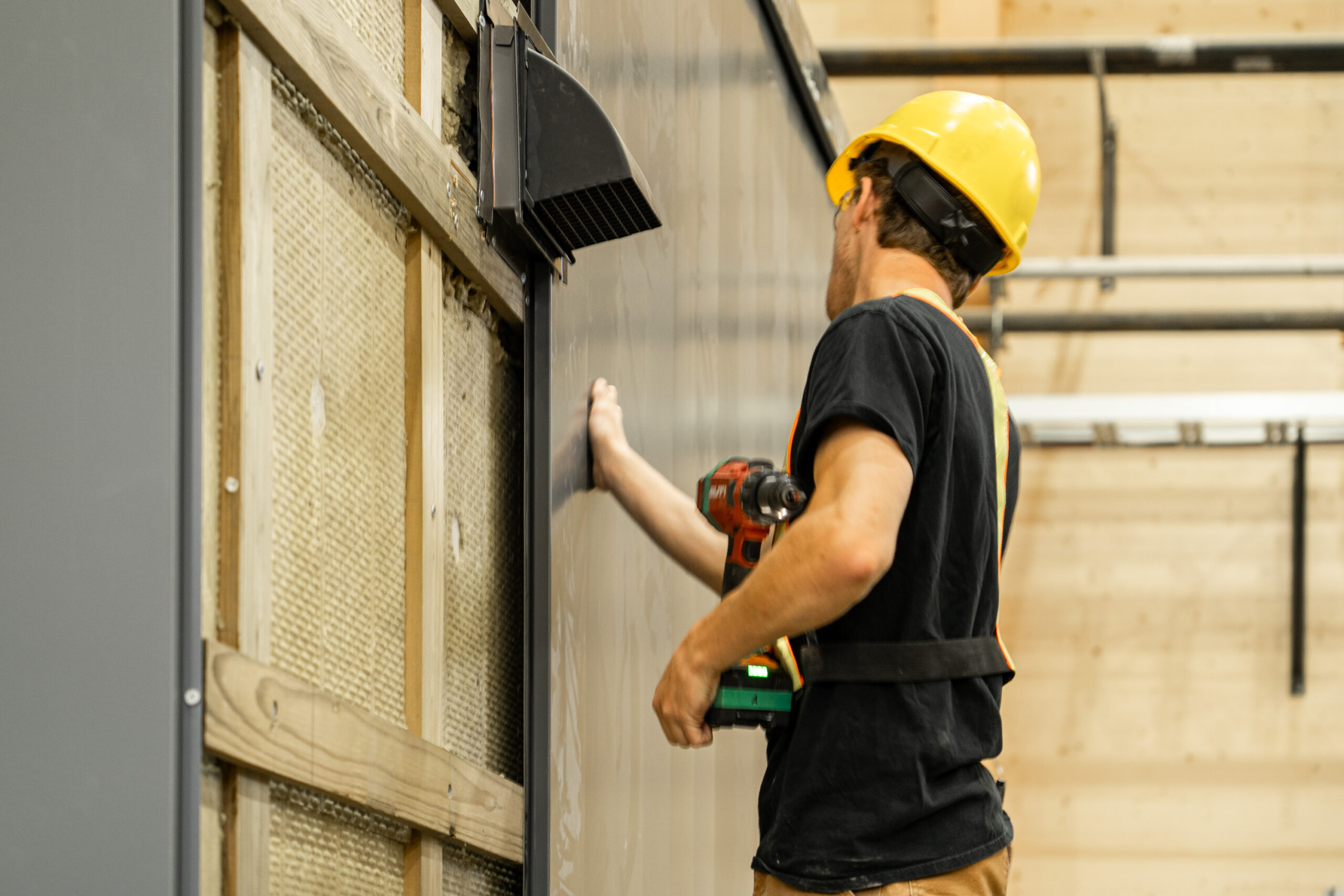
Kalesnikoff Mass Timber and K3 modular construction operations near Castlegar, British Columbia. Founded as a family-owned sawmill in 1940, Kalesnikoff has expanded into mass timber, modular components and finished building systems, investing about $65 million across major facilities in South Slocan and Castlegar. The site shows how a traditional forestry company can move up the value chain, supporting regional employment while producing engineered wood products that can contribute to faster construction and lower embodied carbon in some building applications.
Kalesnikoff Mass Timber and K3 modular construction operations near Castlegar, British Columbia. Founded as a family-owned sawmill in 1940, Kalesnikoff has expanded into mass timber, modular components and finished building systems, investing about $65 million across major facilities in South Slocan and Castlegar. The site shows how a traditional forestry company can move up the value chain, supporting regional employment while producing engineered wood products that can contribute to faster construction and lower embodied carbon in some building applications.
Kalesnikoff Mass Timber and K3 modular construction operations near Castlegar, British Columbia. Founded as a family-owned sawmill in 1940, Kalesnikoff has expanded into mass timber, modular components and finished building systems, investing about $65 million across major facilities in South Slocan and Castlegar. The site shows how a traditional forestry company can move up the value chain, supporting regional employment while producing engineered wood products that can contribute to faster construction and lower embodied carbon in some building applications.
Kalesnikoff Mass Timber and K3 modular construction operations near Castlegar, British Columbia. Founded as a family-owned sawmill in 1940, Kalesnikoff has expanded into mass timber, modular components and finished building systems, investing about $65 million across major facilities in South Slocan and Castlegar. The site shows how a traditional forestry company can move up the value chain, supporting regional employment while producing engineered wood products that can contribute to faster construction and lower embodied carbon in some building applications.
Kalesnikoff Mass Timber and K3 modular construction operations near Castlegar, British Columbia. Founded as a family-owned sawmill in 1940, Kalesnikoff has expanded into mass timber, modular components and finished building systems, investing about $65 million across major facilities in South Slocan and Castlegar. The site shows how a traditional forestry company can move up the value chain, supporting regional employment while producing engineered wood products that can contribute to faster construction and lower embodied carbon in some building applications.
Kalesnikoff Mass Timber and K3 modular construction operations near Castlegar, British Columbia. Founded as a family-owned sawmill in 1940, Kalesnikoff has expanded into mass timber, modular components and finished building systems, investing about $65 million across major facilities in South Slocan and Castlegar. The site shows how a traditional forestry company can move up the value chain, supporting regional employment while producing engineered wood products that can contribute to faster construction and lower embodied carbon in some building applications.
Kalesnikoff Mass Timber and K3 modular construction operations near Castlegar, British Columbia. Founded as a family-owned sawmill in 1940, Kalesnikoff has expanded into mass timber, modular components and finished building systems, investing about $65 million across major facilities in South Slocan and Castlegar. The site shows how a traditional forestry company can move up the value chain, supporting regional employment while producing engineered wood products that can contribute to faster construction and lower embodied carbon in some building applications.
Kalesnikoff Mass Timber and K3 modular construction operations near Castlegar, British Columbia. Founded as a family-owned sawmill in 1940, Kalesnikoff has expanded into mass timber, modular components and finished building systems, investing about $65 million across major facilities in South Slocan and Castlegar. The site shows how a traditional forestry company can move up the value chain, supporting regional employment while producing engineered wood products that can contribute to faster construction and lower embodied carbon in some building applications.
Kalesnikoff Mass Timber and K3 modular construction operations near Castlegar, British Columbia. Founded as a family-owned sawmill in 1940, Kalesnikoff has expanded into mass timber, modular components and finished building systems, investing about $65 million across major facilities in South Slocan and Castlegar. The site shows how a traditional forestry company can move up the value chain, supporting regional employment while producing engineered wood products that can contribute to faster construction and lower embodied carbon in some building applications.
Kalesnikoff Mass Timber and K3 modular construction operations near Castlegar, British Columbia. Founded as a family-owned sawmill in 1940, Kalesnikoff has expanded into mass timber, modular components and finished building systems, investing about $65 million across major facilities in South Slocan and Castlegar. The site shows how a traditional forestry company can move up the value chain, supporting regional employment while producing engineered wood products that can contribute to faster construction and lower embodied carbon in some building applications.
Kalesnikoff Mass Timber and K3 modular construction operations near Castlegar, British Columbia. Founded as a family-owned sawmill in 1940, Kalesnikoff has expanded into mass timber, modular components and finished building systems, investing about $65 million across major facilities in South Slocan and Castlegar. The site shows how a traditional forestry company can move up the value chain, supporting regional employment while producing engineered wood products that can contribute to faster construction and lower embodied carbon in some building applications.
Kalesnikoff Mass Timber and K3 modular construction operations near Castlegar, British Columbia. Founded as a family-owned sawmill in 1940, Kalesnikoff has expanded into mass timber, modular components and finished building systems, investing about $65 million across major facilities in South Slocan and Castlegar. The site shows how a traditional forestry company can move up the value chain, supporting regional employment while producing engineered wood products that can contribute to faster construction and lower embodied carbon in some building applications.
Kalesnikoff Mass Timber and K3 modular construction operations near Castlegar, British Columbia. Founded as a family-owned sawmill in 1940, Kalesnikoff has expanded into mass timber, modular components and finished building systems, investing about $65 million across major facilities in South Slocan and Castlegar. The site shows how a traditional forestry company can move up the value chain, supporting regional employment while producing engineered wood products that can contribute to faster construction and lower embodied carbon in some building applications.
Policy did not create the product, but it is helping expand the market
Canada’s building-code environment is becoming more supportive of mass timber. The 2020 National Building Code introduced a pathway for mass timber buildings up to 12 stories (with conditions), while British Columbia, Quebec and Ontario now allows certain mass timber buildings up to 18 storeys. Today, most provinces have mass timber provisions in their building codes. Kalesnikoff also sells into the U.S. market, including completed buildings in Oregon, Washington and Utah.
The market remains small, around 1% of North America’s buildings material market, but it is growing. Canada’s mass timber producers added near $380 million to Canada’s GDP in 2023 which is estimated to expand to $1 to 1.2 billion by 2030 according to an RBC study.
The Details
Castelgar
Location
2024
Commission modular construction facility
100,000
Castelgar facility size (sq. ft)
65 million
Total investment (mass timber and modular construction)
~500
Current workforce
82
Projects complete
Builders are looking for speed, design quality and lower embodied carbon
Building codes have opened the door, but builders are choosing mass timber for practical reasons as well. In some applications, it can shorten construction timelines and shift work from the construction sites to the factory floor. Where permitted, exposed wood beams also create warm interior spaces that appeal to many of Kalesnikoff’s clients.
Mass timber can also reduce embodied carbon, the emissions associated with producing, transporting and assembling building materials. That can help builders meet low-carbon design goals and reporting requirements in cities such as Vancouver. Actual reductions vary by design, timber source, manufacturing process, transport distance and accounting method.
Riding a growing market requires timber, workers and innovation
With mass timber now included in building codes across much of the country, one barrier to adoption has been reduced. But the path is not simple. Kalesnikoff is increasingly working with second-growth timber, which can require different approaches to product design, testing and certification. It also continues to compete for declining timber production in British Columbia. Growth has changed the company itself. Expanding into mass timber has required new manufacturing skills, design and technical expertise, along with the administrative capacity needed by any growing business. Many builders are also learning to work with mass timber, and insurers to understand their fire, moisture and long-term ware risks
Mass timber remains a small fraction of total construction, and it will not replace conventional materials in every building. But in the right applications, it offers a useful mix of advantages: simpler assembly, factory-controlled production, compatibility with low-carbon building design and a finished product that many prize.