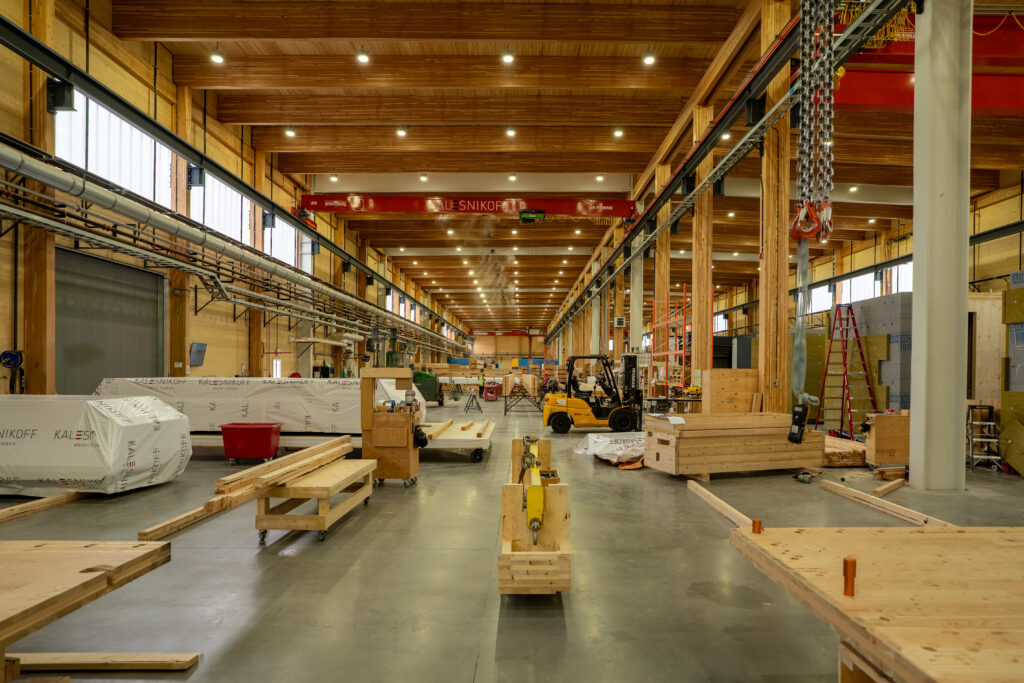
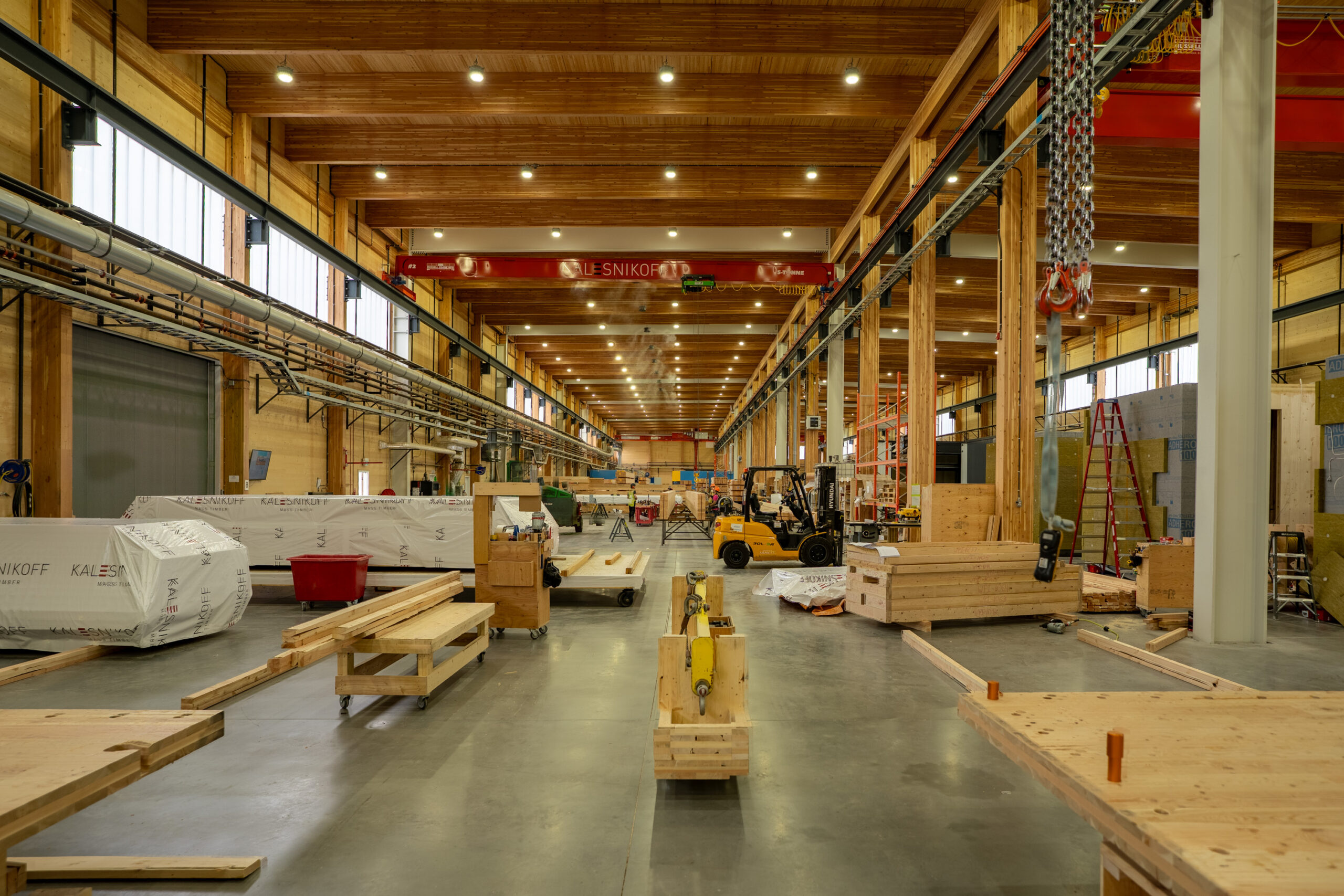
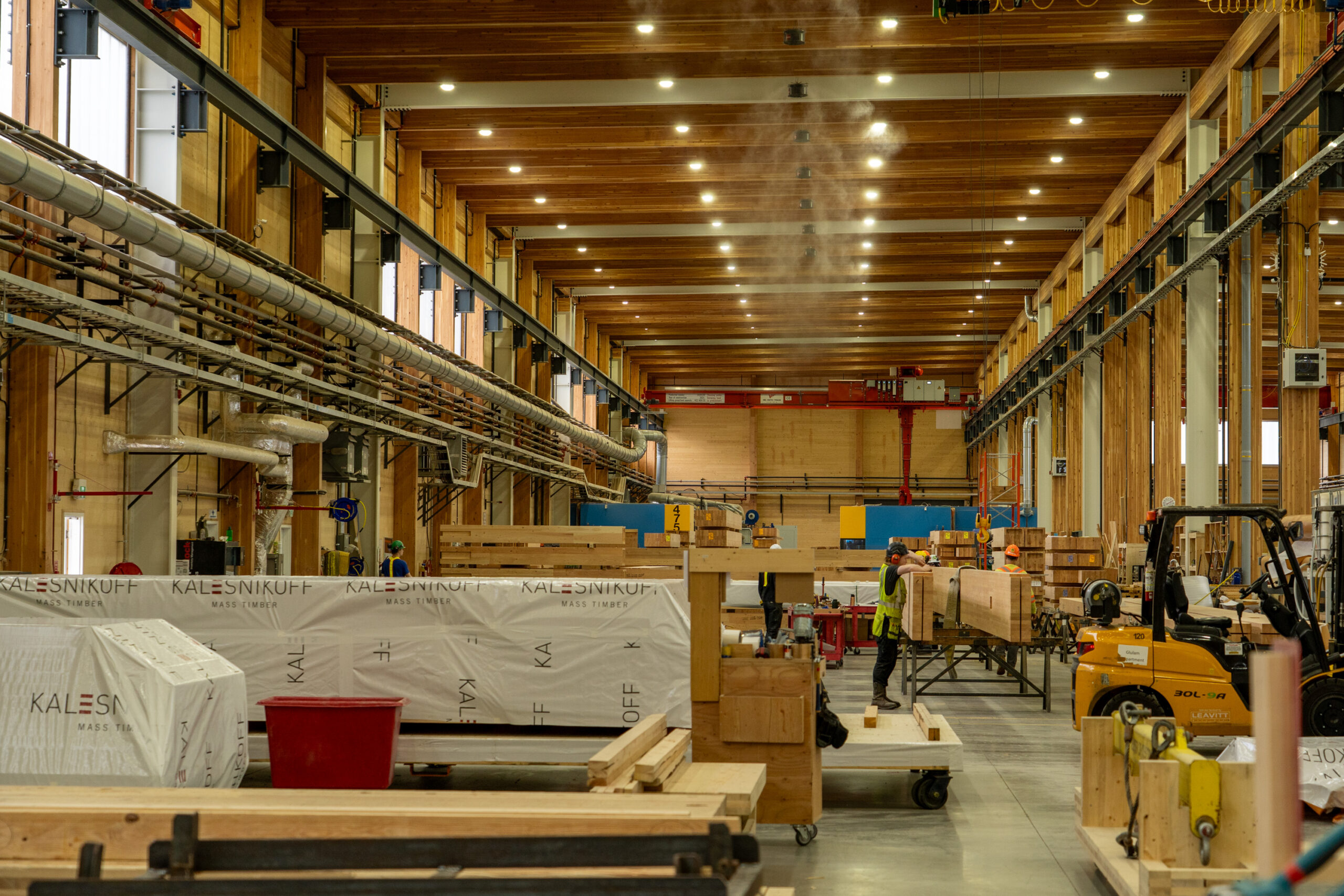
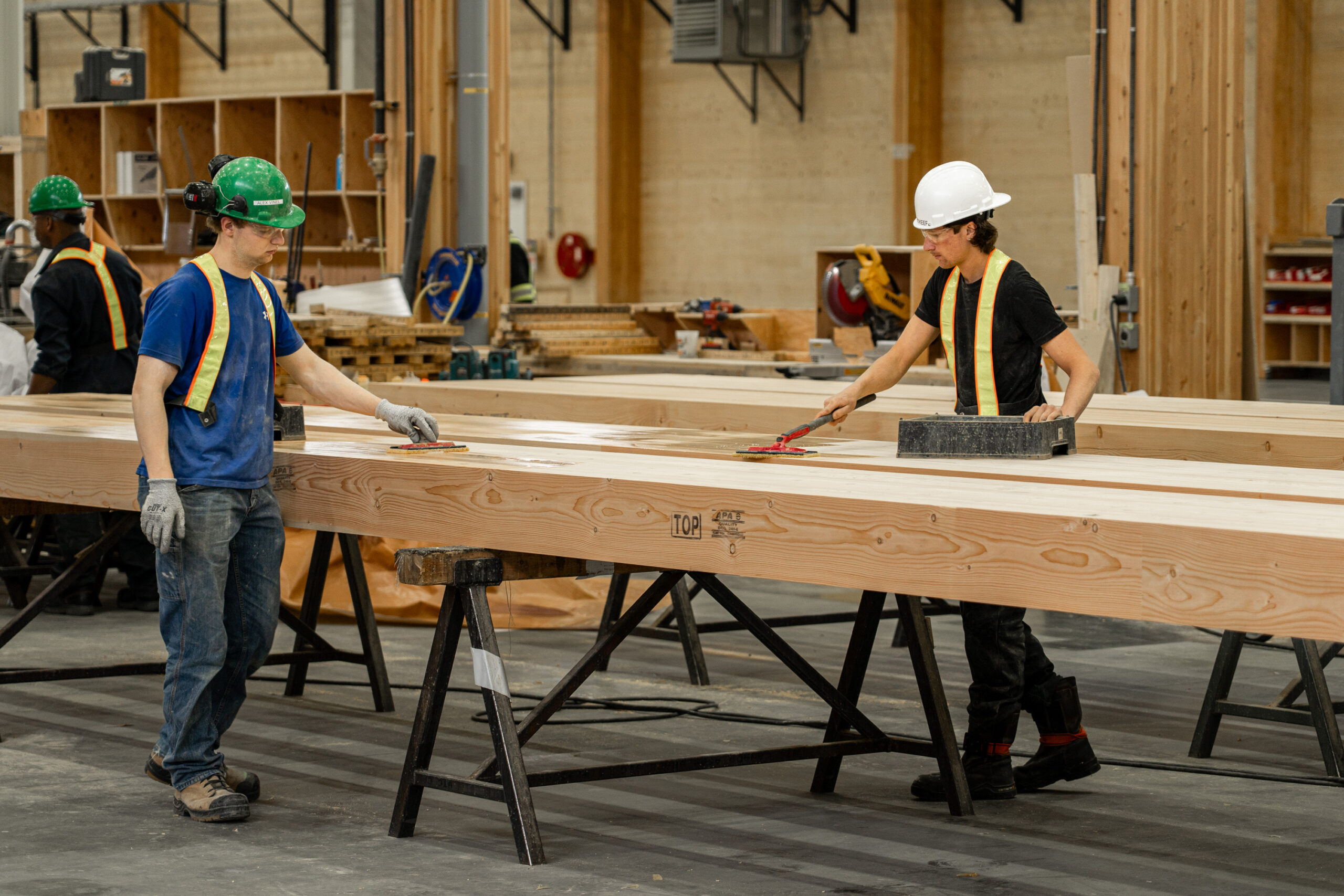
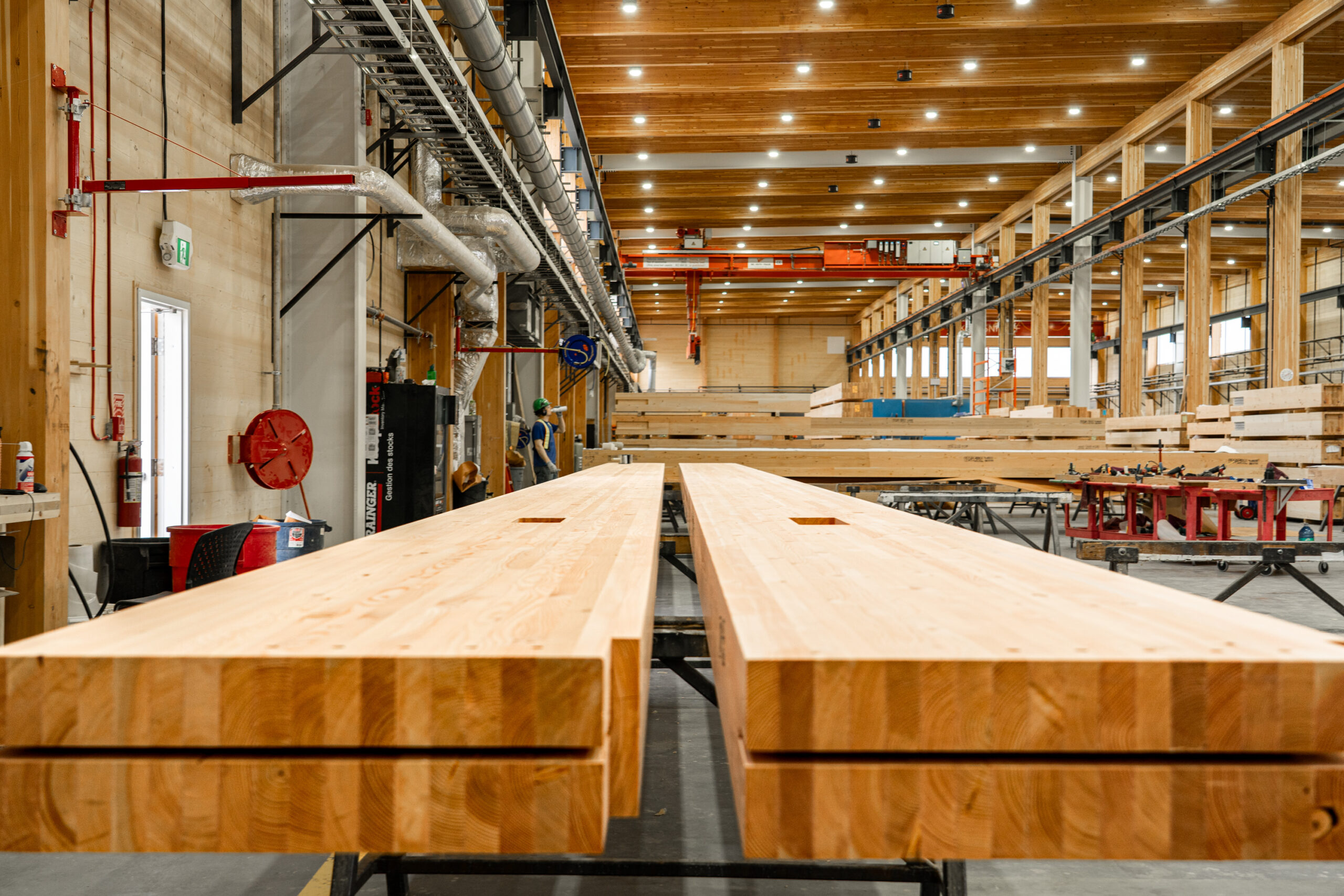
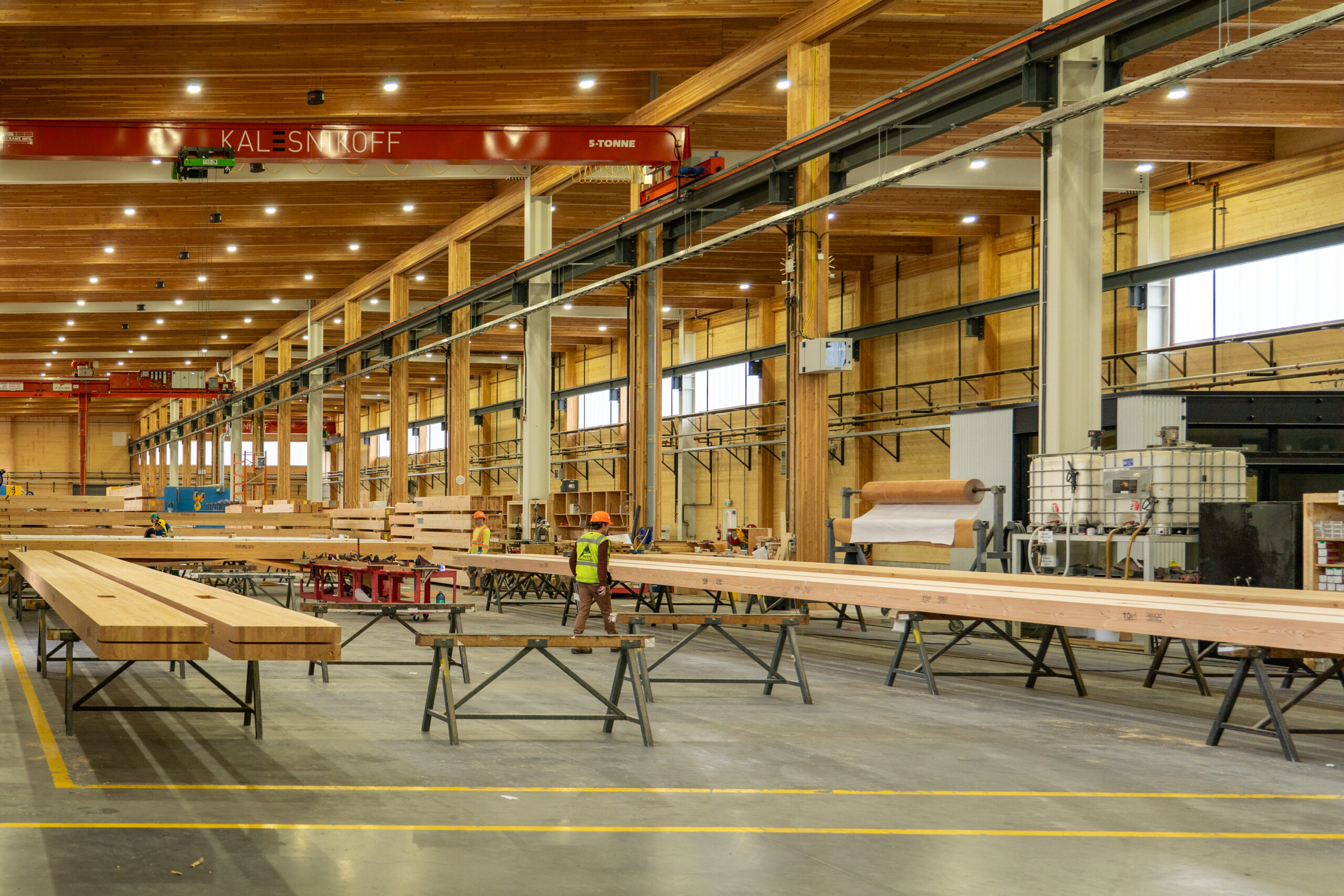
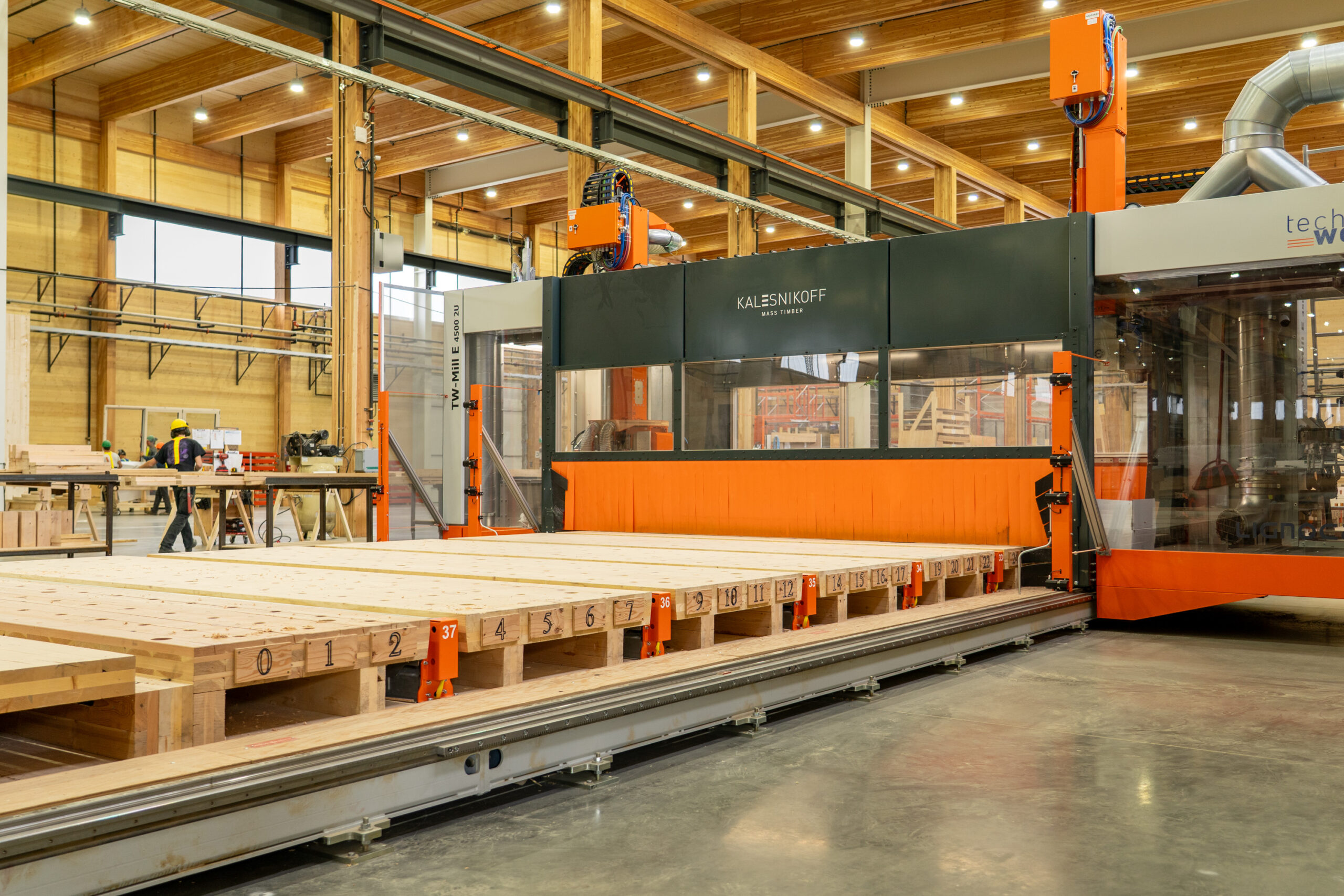
As I walk into Kalesnikoff’s Mass Timber Facility in Castlegar, my eyes move across an expansive, wood-framed, naturally lit space. To my right is a CNC machine, a computer-controlled tool the size of a cargo container that cuts wood components with precision. To my left, workers prepare large structural columns made from dozens of smaller pieces of wood.
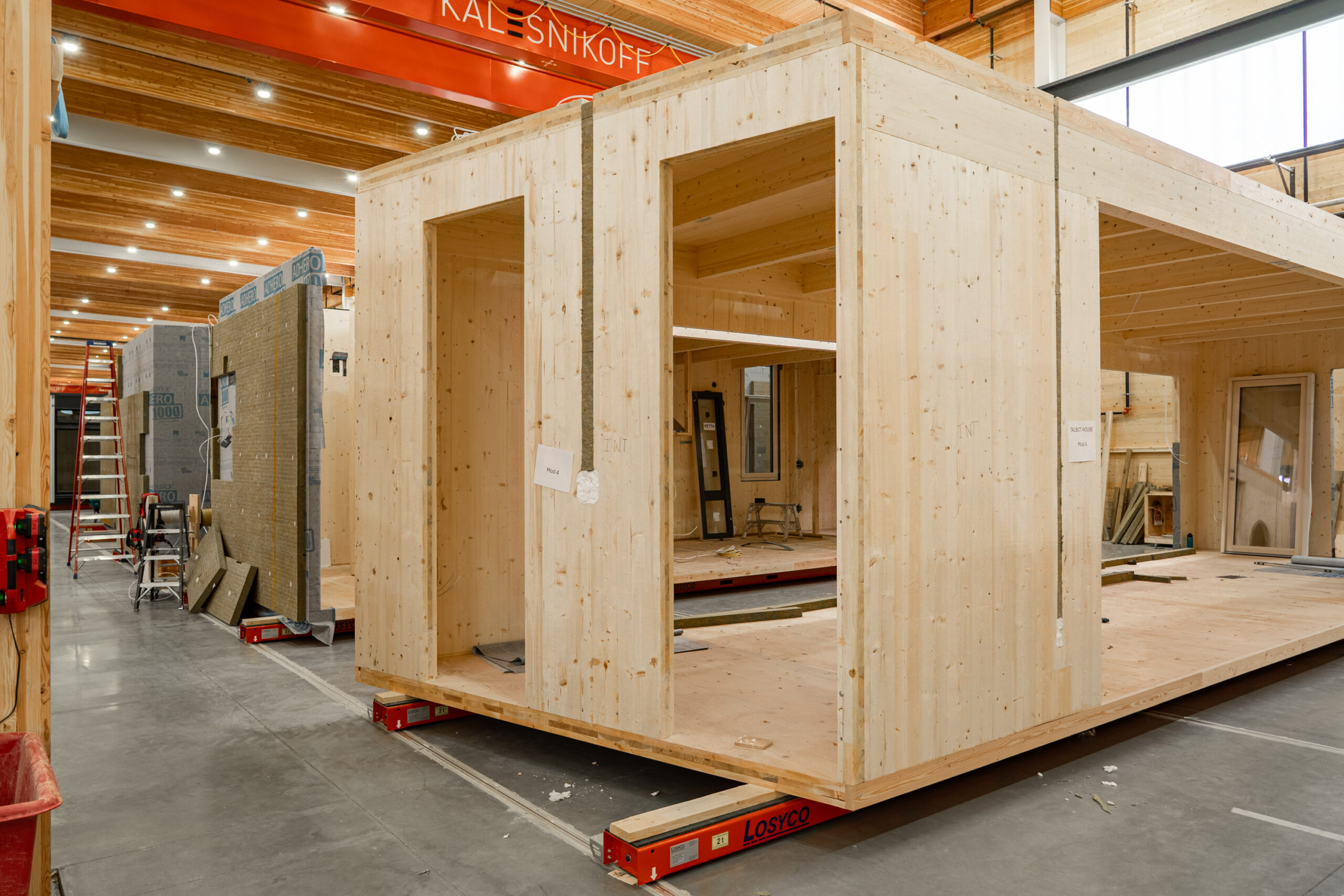
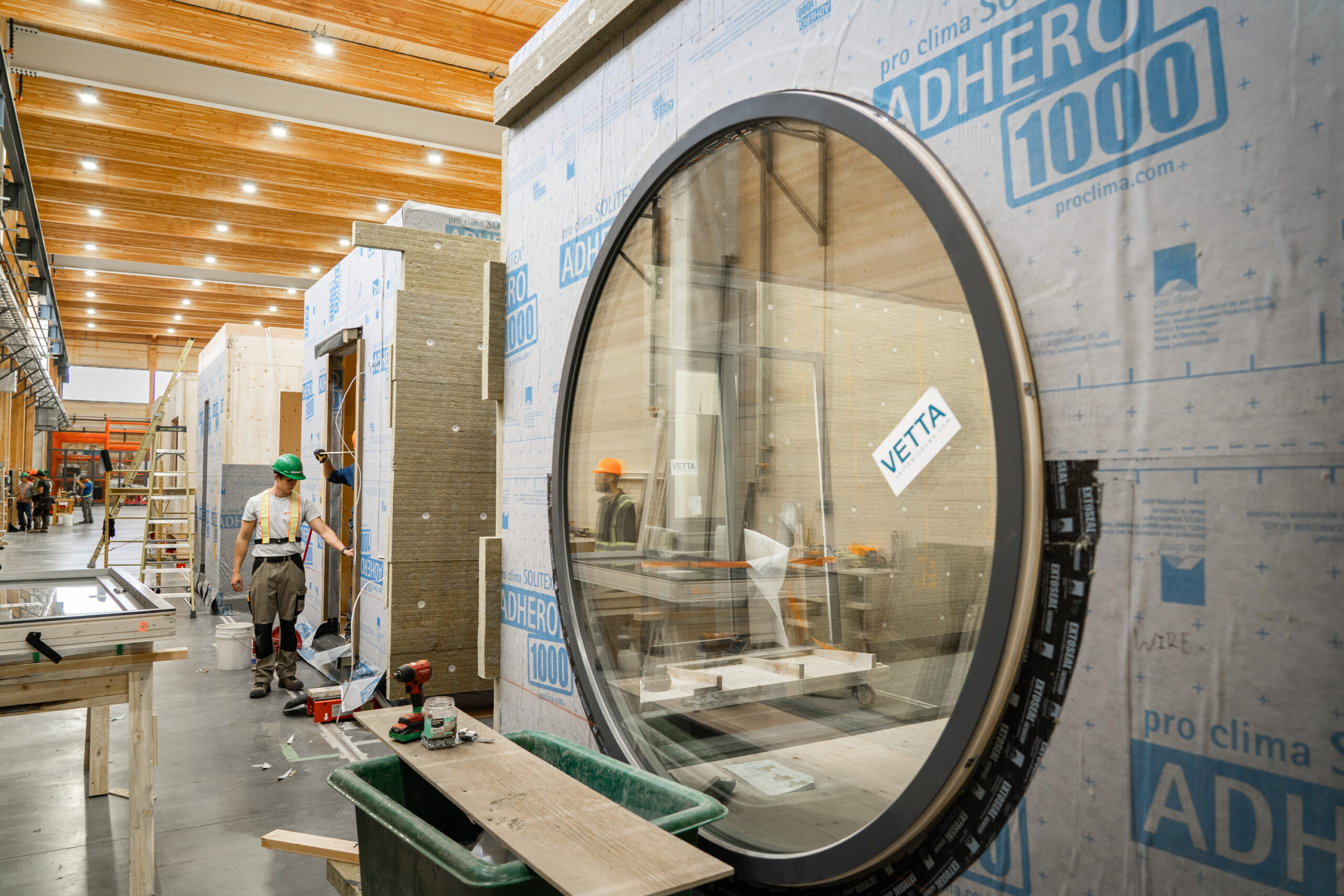
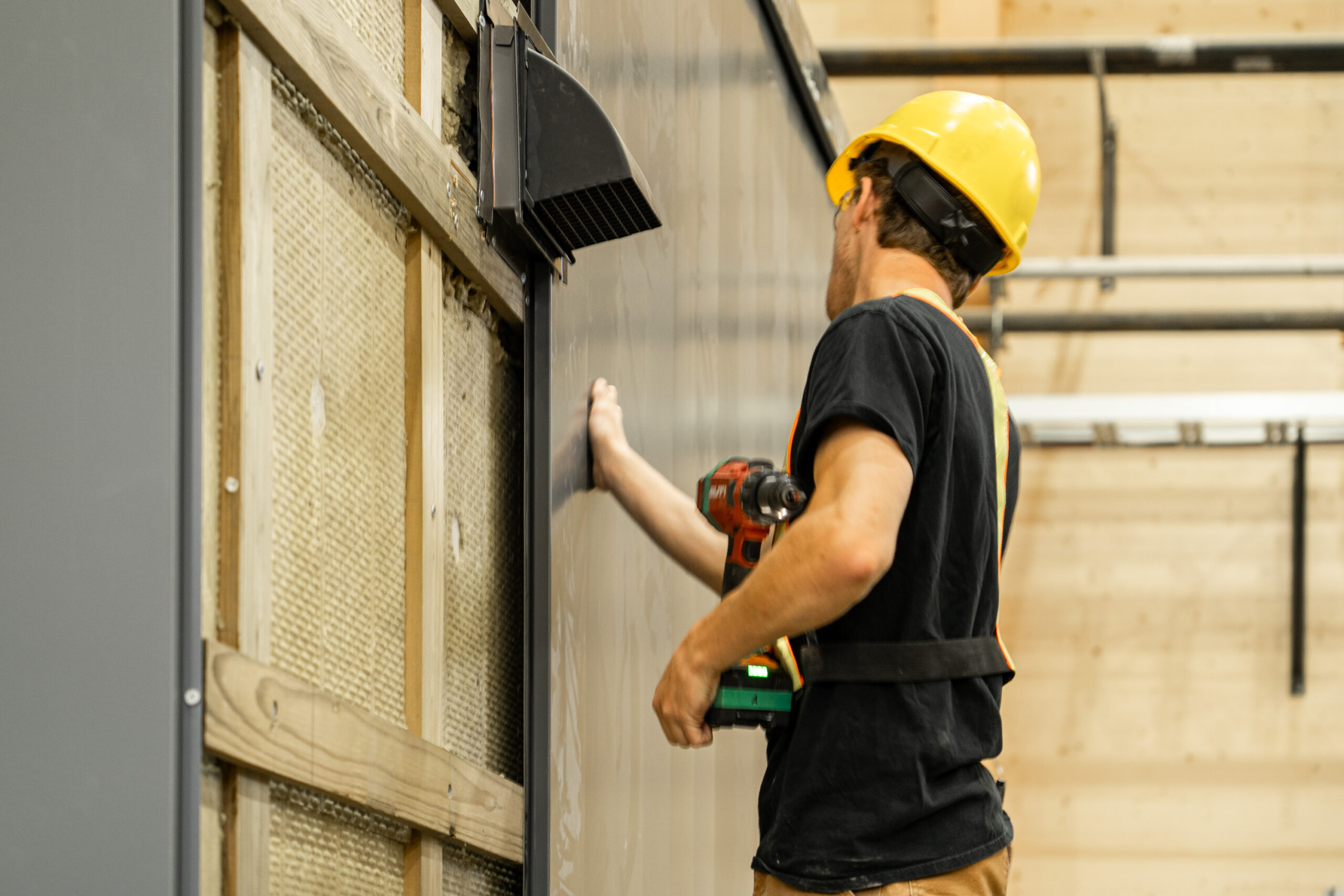
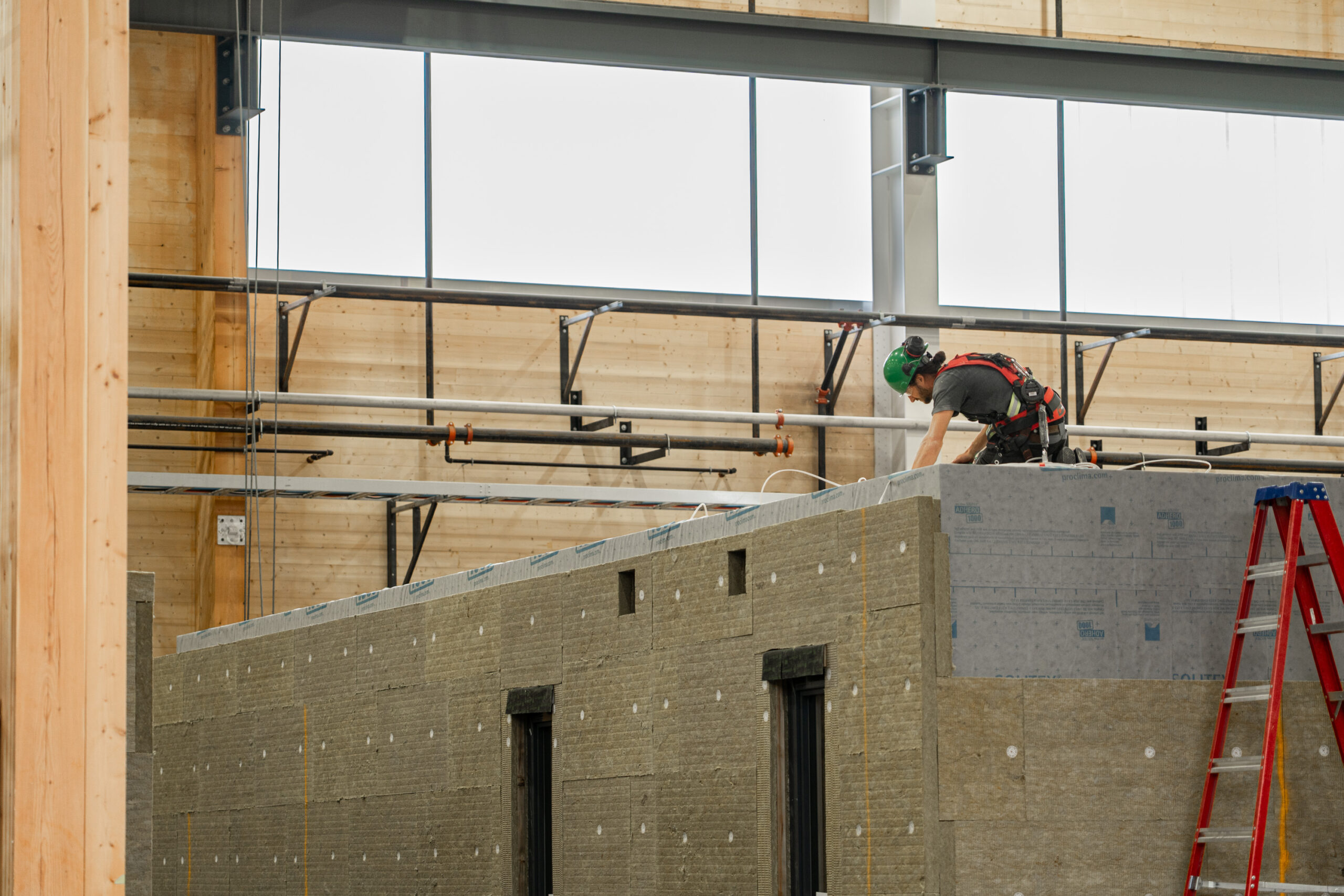
Across the room, full building modules move through a production line, from exposed frames to nearly finished units complete with stoves and refrigerators. Kalesnikoff is producing custom structural wood products, modular components and finished building systems. It has also created nearly 100 jobs, bringing income, technical skills and economic activity to the region. This is what moving up the value chain can look like in Canada.
The shift to mass timber was risky, but staying in commodity lumber was risky too
Kalesnikoff started its sawmill in 1940 near Castlegar and remains a family business, now led by CEO Chris Kalesnikoff. The company prospered as a specialist lumber supplier to domestic markets and export customers in the United States, Japan and Europe. But the mill has faced increasing competitive pressure from larger producers, volatile lumber markets, tariffs and declining timber availability.
Mass timber offered a way to build on what Kalesnikoff already knew while moving into a higher-value market. But the shift required new equipment, new expertise, new customers and confidence that the market for larger wood buildings would expand.
Before making the leap, Kalesnikoff studied European plant designs, visited facilities and assessed technologies. The company ultimately invested $65 million across two major expansions: $35 million for its mass timber facility in South Slocan and $30 million for its K3 modular construction facility in Castlegar. Government support helped reduce the risk of the Castlegar expansion, including $3 million from Natural Resources Canada’s Investments in Forest Industry Transformation program and $6.7 million from British Columbia’s Manufacturing Jobs Fund, part of B.C.’s Mass Timber Strategy.
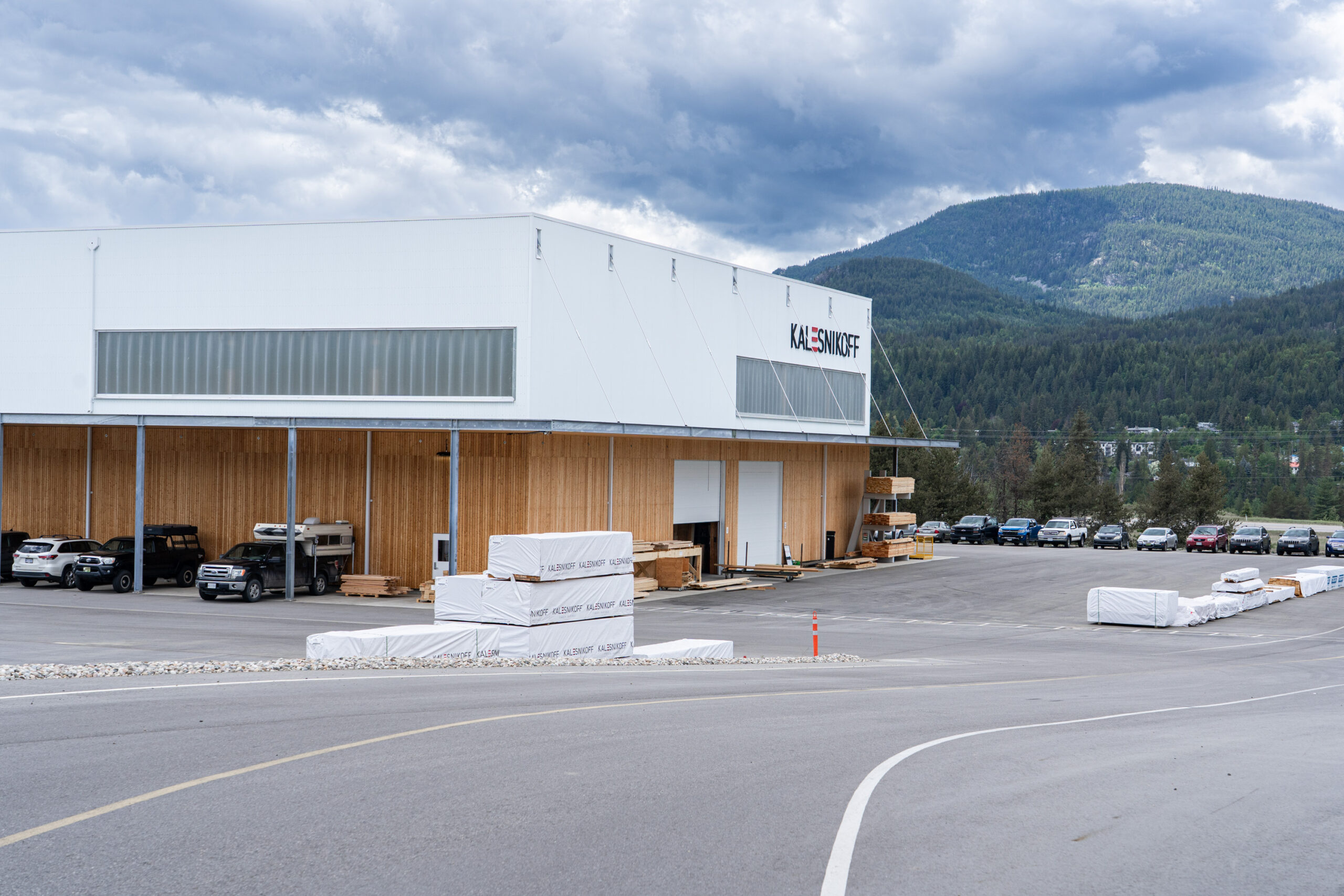
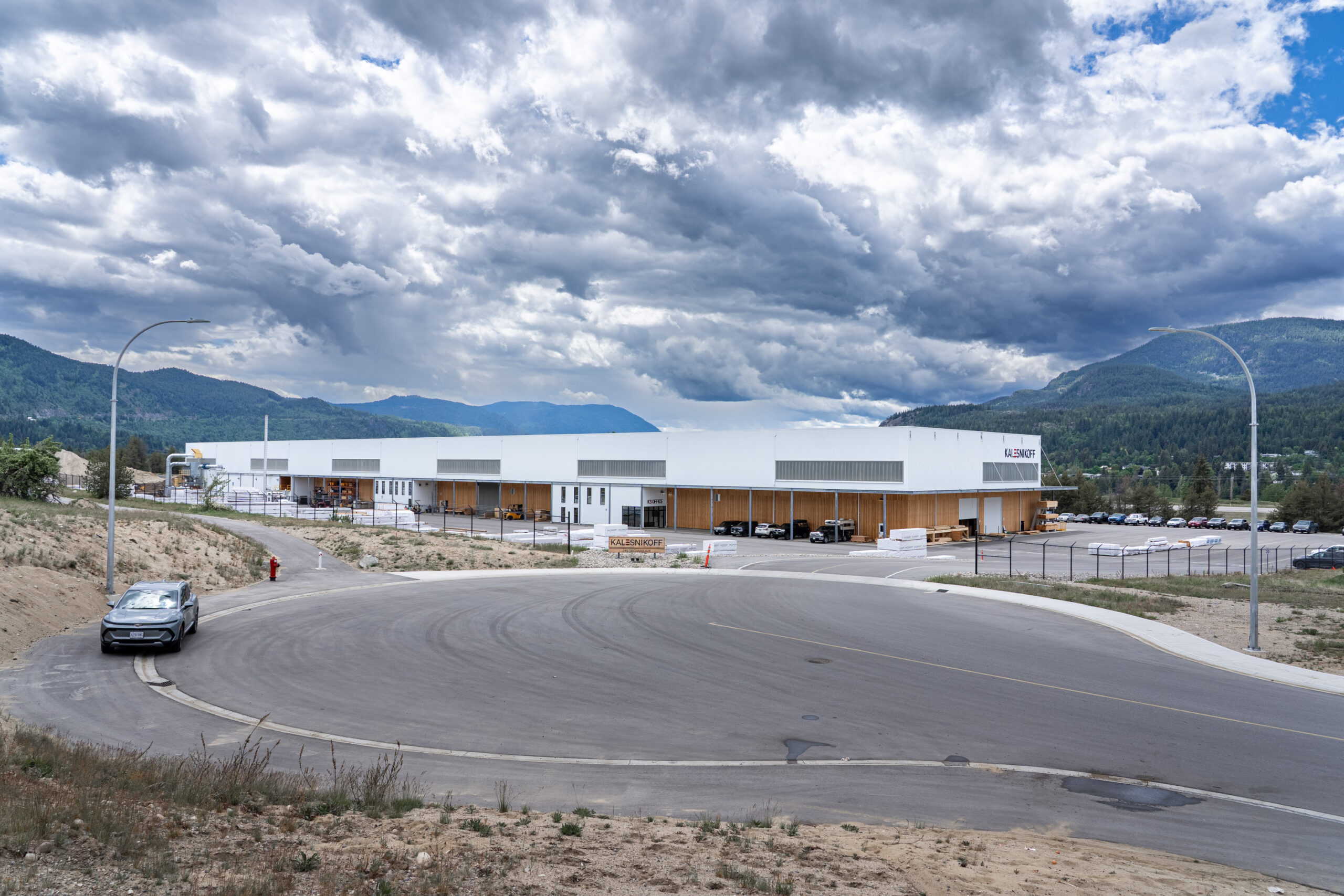
Kalesnikoff Mass Timber and K3 modular construction operations near Castlegar, British Columbia. Founded as a family-owned sawmill in 1940, Kalesnikoff has expanded into mass timber, modular components and finished building systems, investing about $65 million across major facilities in South Slocan and Castlegar. The site shows how a traditional forestry company can move up the value chain, supporting regional employment while producing engineered wood products that can contribute to faster construction and lower embodied carbon in some building applications.
Kalesnikoff Mass Timber and K3 modular construction operations near Castlegar, British Columbia. Founded as a family-owned sawmill in 1940, Kalesnikoff has expanded into mass timber, modular components and finished building systems, investing about $65 million across major facilities in South Slocan and Castlegar. The site shows how a traditional forestry company can move up the value chain, supporting regional employment while producing engineered wood products that can contribute to faster construction and lower embodied carbon in some building applications.
Kalesnikoff Mass Timber and K3 modular construction operations near Castlegar, British Columbia. Founded as a family-owned sawmill in 1940, Kalesnikoff has expanded into mass timber, modular components and finished building systems, investing about $65 million across major facilities in South Slocan and Castlegar. The site shows how a traditional forestry company can move up the value chain, supporting regional employment while producing engineered wood products that can contribute to faster construction and lower embodied carbon in some building applications.
Kalesnikoff Mass Timber and K3 modular construction operations near Castlegar, British Columbia. Founded as a family-owned sawmill in 1940, Kalesnikoff has expanded into mass timber, modular components and finished building systems, investing about $65 million across major facilities in South Slocan and Castlegar. The site shows how a traditional forestry company can move up the value chain, supporting regional employment while producing engineered wood products that can contribute to faster construction and lower embodied carbon in some building applications.
Kalesnikoff Mass Timber and K3 modular construction operations near Castlegar, British Columbia. Founded as a family-owned sawmill in 1940, Kalesnikoff has expanded into mass timber, modular components and finished building systems, investing about $65 million across major facilities in South Slocan and Castlegar. The site shows how a traditional forestry company can move up the value chain, supporting regional employment while producing engineered wood products that can contribute to faster construction and lower embodied carbon in some building applications.
Kalesnikoff Mass Timber and K3 modular construction operations near Castlegar, British Columbia. Founded as a family-owned sawmill in 1940, Kalesnikoff has expanded into mass timber, modular components and finished building systems, investing about $65 million across major facilities in South Slocan and Castlegar. The site shows how a traditional forestry company can move up the value chain, supporting regional employment while producing engineered wood products that can contribute to faster construction and lower embodied carbon in some building applications.
Kalesnikoff Mass Timber and K3 modular construction operations near Castlegar, British Columbia. Founded as a family-owned sawmill in 1940, Kalesnikoff has expanded into mass timber, modular components and finished building systems, investing about $65 million across major facilities in South Slocan and Castlegar. The site shows how a traditional forestry company can move up the value chain, supporting regional employment while producing engineered wood products that can contribute to faster construction and lower embodied carbon in some building applications.
Kalesnikoff Mass Timber and K3 modular construction operations near Castlegar, British Columbia. Founded as a family-owned sawmill in 1940, Kalesnikoff has expanded into mass timber, modular components and finished building systems, investing about $65 million across major facilities in South Slocan and Castlegar. The site shows how a traditional forestry company can move up the value chain, supporting regional employment while producing engineered wood products that can contribute to faster construction and lower embodied carbon in some building applications.
Kalesnikoff Mass Timber and K3 modular construction operations near Castlegar, British Columbia. Founded as a family-owned sawmill in 1940, Kalesnikoff has expanded into mass timber, modular components and finished building systems, investing about $65 million across major facilities in South Slocan and Castlegar. The site shows how a traditional forestry company can move up the value chain, supporting regional employment while producing engineered wood products that can contribute to faster construction and lower embodied carbon in some building applications.
Kalesnikoff Mass Timber and K3 modular construction operations near Castlegar, British Columbia. Founded as a family-owned sawmill in 1940, Kalesnikoff has expanded into mass timber, modular components and finished building systems, investing about $65 million across major facilities in South Slocan and Castlegar. The site shows how a traditional forestry company can move up the value chain, supporting regional employment while producing engineered wood products that can contribute to faster construction and lower embodied carbon in some building applications.
Kalesnikoff Mass Timber and K3 modular construction operations near Castlegar, British Columbia. Founded as a family-owned sawmill in 1940, Kalesnikoff has expanded into mass timber, modular components and finished building systems, investing about $65 million across major facilities in South Slocan and Castlegar. The site shows how a traditional forestry company can move up the value chain, supporting regional employment while producing engineered wood products that can contribute to faster construction and lower embodied carbon in some building applications.
Kalesnikoff Mass Timber and K3 modular construction operations near Castlegar, British Columbia. Founded as a family-owned sawmill in 1940, Kalesnikoff has expanded into mass timber, modular components and finished building systems, investing about $65 million across major facilities in South Slocan and Castlegar. The site shows how a traditional forestry company can move up the value chain, supporting regional employment while producing engineered wood products that can contribute to faster construction and lower embodied carbon in some building applications.
Kalesnikoff Mass Timber and K3 modular construction operations near Castlegar, British Columbia. Founded as a family-owned sawmill in 1940, Kalesnikoff has expanded into mass timber, modular components and finished building systems, investing about $65 million across major facilities in South Slocan and Castlegar. The site shows how a traditional forestry company can move up the value chain, supporting regional employment while producing engineered wood products that can contribute to faster construction and lower embodied carbon in some building applications.
Policy did not create the product, but it is helping expand the market
Canada’s building-code environment is becoming more supportive of mass timber. The 2020 National Building Code introduced a pathway for mass timber buildings up to 12 stories (with conditions), while British Columbia, Quebec and Ontario now allows certain mass timber buildings up to 18 storeys. Today, most provinces have mass timber provisions in their building codes. Kalesnikoff also sells into the U.S. market, including completed buildings in Oregon, Washington and Utah.
The market remains small, around 1% of North America’s buildings material market, but it is growing. Canada’s mass timber producers added near $380 million to Canada’s GDP in 2023 which is estimated to expand to $1 to 1.2 billion by 2030 according to an RBC study.
The Details
Castelgar
Location
2024
Commission modular construction facility
100,000
Castelgar facility size (sq. ft)
65 million
Total investment (mass timber and modular construction)
~500
Current workforce
82
Projects complete
Builders are looking for speed, design quality and lower embodied carbon
Building codes have opened the door, but builders are choosing mass timber for practical reasons as well. In some applications, it can shorten construction timelines and shift work from the construction sites to the factory floor. Where permitted, exposed wood beams also create warm interior spaces that appeal to many of Kalesnikoff’s clients.
Mass timber can also reduce embodied carbon, the emissions associated with producing, transporting and assembling building materials. That can help builders meet low-carbon design goals and reporting requirements in cities such as Vancouver. Actual reductions vary by design, timber source, manufacturing process, transport distance and accounting method.
Riding a growing market requires timber, workers and innovation
With mass timber now included in building codes across much of the country, one barrier to adoption has been reduced. But the path is not simple. Kalesnikoff is increasingly working with second-growth timber, which can require different approaches to product design, testing and certification. It also continues to compete for declining timber production in British Columbia. Growth has changed the company itself. Expanding into mass timber has required new manufacturing skills, design and technical expertise, along with the administrative capacity needed by any growing business. Many builders are also learning to work with mass timber, and insurers to understand their fire, moisture and long-term ware risks
Mass timber remains a small fraction of total construction, and it will not replace conventional materials in every building. But in the right applications, it offers a useful mix of advantages: simpler assembly, factory-controlled production, compatibility with low-carbon building design and a finished product that many prize.
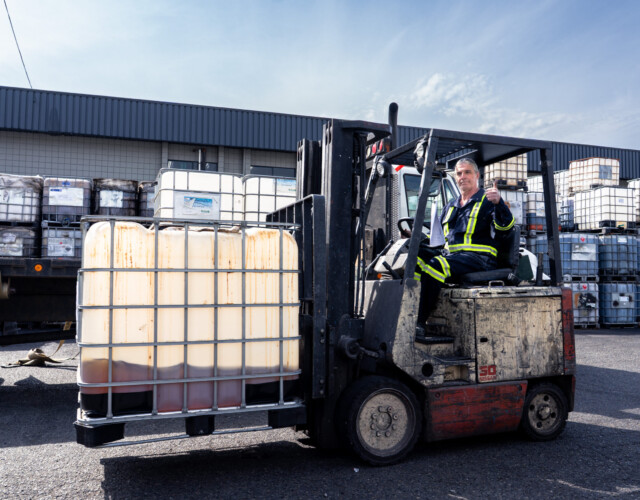
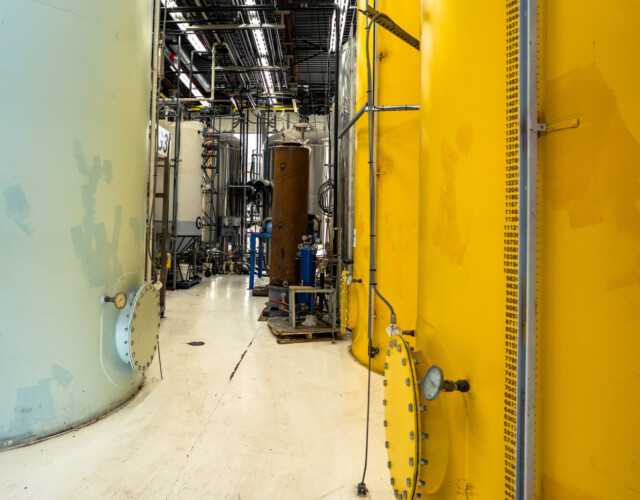
In a facility in Surrey, B.C., Consolidated Biofuels is taking waste oils and greases collected from the Pacific Northwest and turning them into biodiesel. The technology is not new. Biodiesel moved into the mainstream years ago and is now produced at scale by major agribusinesses such as ADM, while multinationals such as Neste, Chevron and TotalEnergies produce competing renewable fuels. Against that backdrop, the surprise is not what Consolidated Biofuels makes. It is that a small B.C. producer continues to succeed.
“With our fuel you can get zero emissions today”
Dan Treleaven
CEO
Innovation as survival strategy
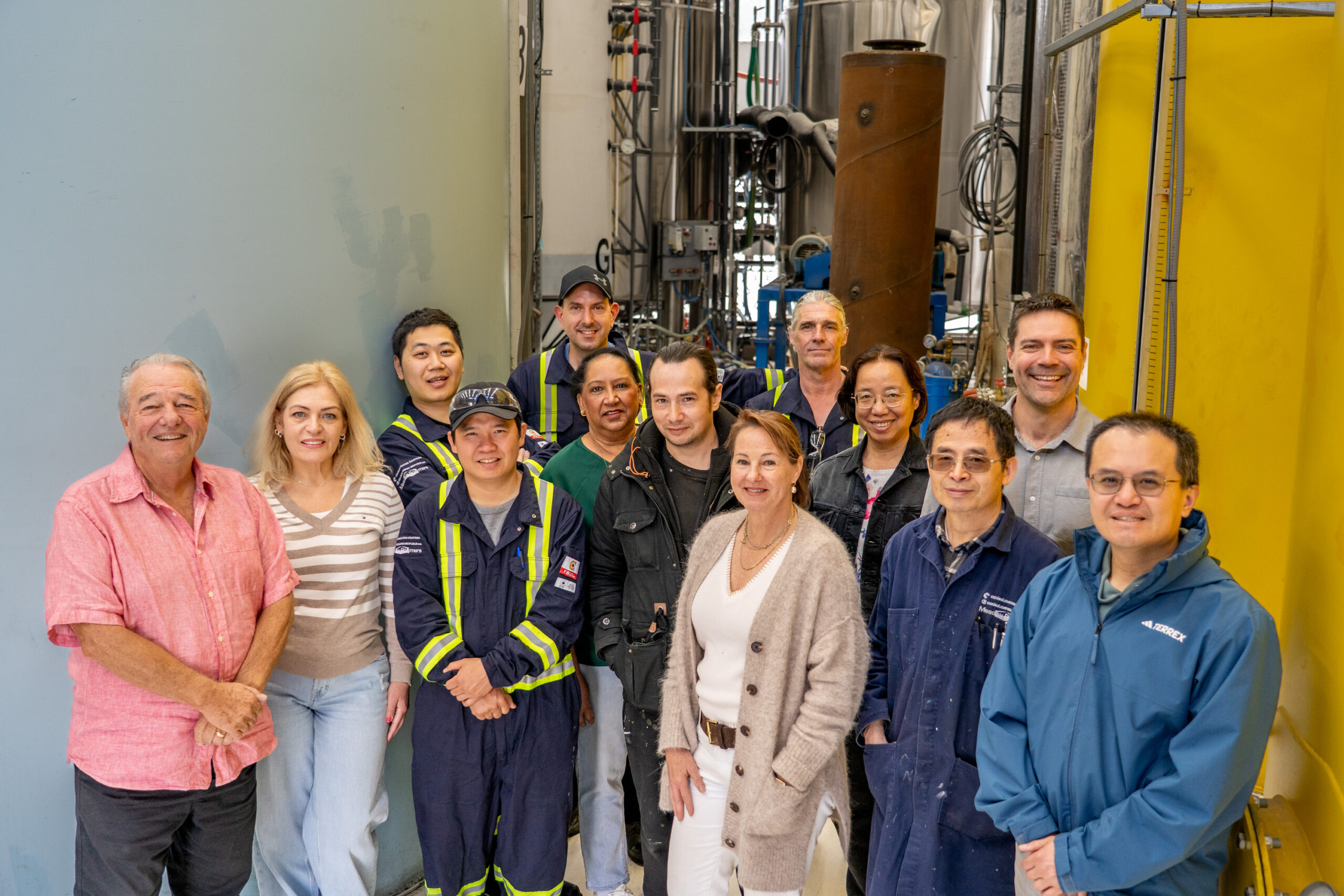
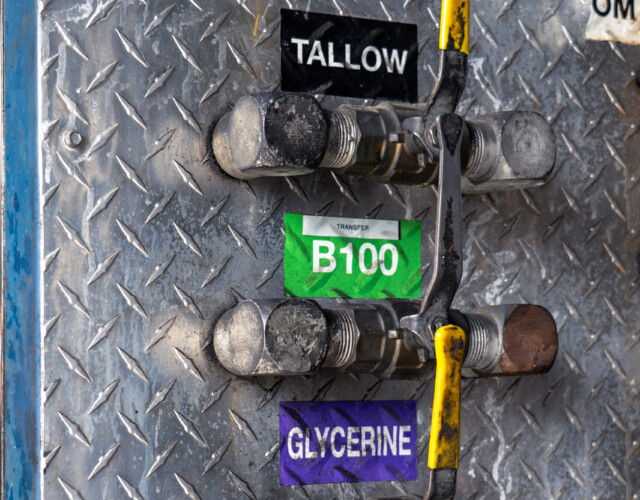
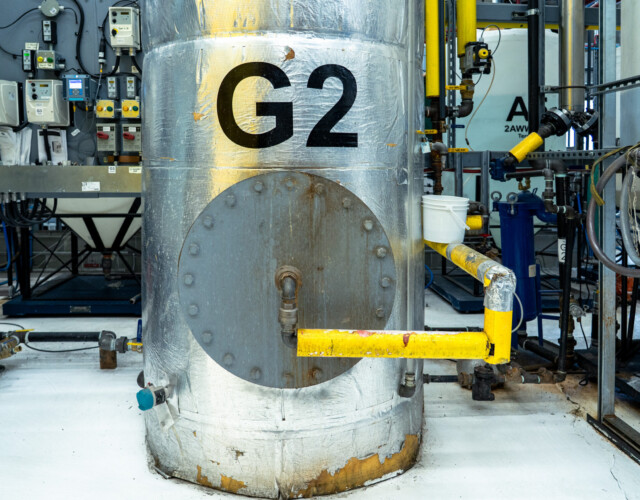
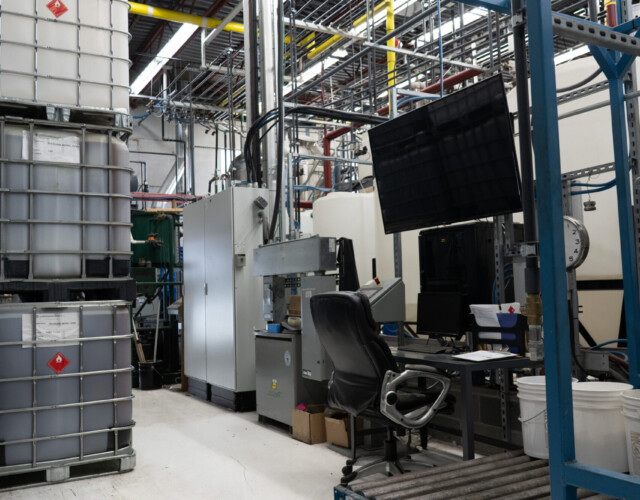
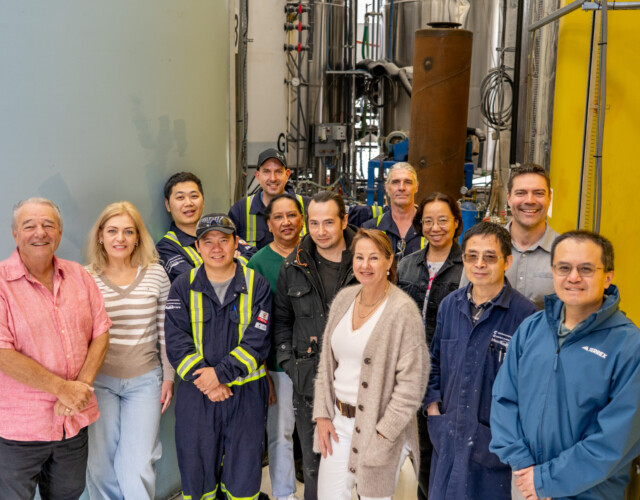
As Dan Treleaven and Graeme Pitches explained during my visit, Consolidated Biofuels’ competitive edge comes from constant innovation, diversification and a commitment to quality. The company is part of a broader group of businesses spanning biofuels, coatings, polymers and other specialty chemicals. Its roots trace back to Consolidated Coatings, founded by Treleaven in 1981, before expanding into biodiesel through Consolidated Biofuels in 2008 and later into polymers through Meadow Polymers in 2013. According to the company, that broader product base has helped it manage the ups and downs of the biodiesel market, where waste oil prices, credit values and fuel demand can shift quickly. It has also created opportunities for integration, including the use of glycerin, a key biodiesel by-product, in the group’s polymer business. That helps reduce costs, make better use of materials and lower the carbon intensity of the final fuel.
Consolidated Biofuels
Consolidated Biofuels
Consolidated Biofuels
Consolidated Biofuels
Consolidated Biofuels
Consolidated Biofuels
Consolidated Biofuels
Consolidated Biofuels
Consolidated Biofuels
Consolidated Biofuels
Cleaner fuel, lower cost
That matters because cleaner fuel now has a market value. Consolidated’s biodiesel is among the cleanest in Canada[1]. It is also currently significantly cheaper than diesel, despite costing more to produce. The difference comes from policy. British Columbia’s Low-Carbon Fuel Standard, first implemented in 2010, and Canada’s Clean Fuel Regulations, which began its first compliance period in July 2023, both reward fuels with lower lifecycle greenhouse gas intensities. The policy design creates a direct innovation signal: the cleaner the fuel, the more valuable it becomes. Because Consolidated sells into British Columbia, it can combine provincial and federal clean fuel credits, improving the economics of lower-carbon fuels and reducing the volume fuel suppliers need to meet compliance obligations.
Consolidated is always on the look out for customers wanting to cut the carbon intensity of their fuel. Shipping is one. The sector remains overwhelmingly dependent on oil-based fuels, with biofuels supplying less than 0.5% of global international shipping energy demand in 2024. Today, marine biodiesel demand is still driven mostly by voluntary action, with some support from European regulation. But a proposed International Maritime Organization clean fuel standard for ships could create a more durable compliance market if adopted. Mining is another potential market: diesel-intensive operations in B.C. and Alberta face clean fuel obligations, and biodiesel can reduce on-site emissions without major equipment changes.
Accessing these markets will not be easy. Consolidated will need to continue to compete for waste feedstocks, such as used oils and greases, which are traded internationally and increasingly in demand. For a boutique producer in a market shaped by global players, the path forward is the same as the one that kept it alive: innovate, diversify and make a fuel clean enough to compete.
Helping prove sewage heat recovery in North America
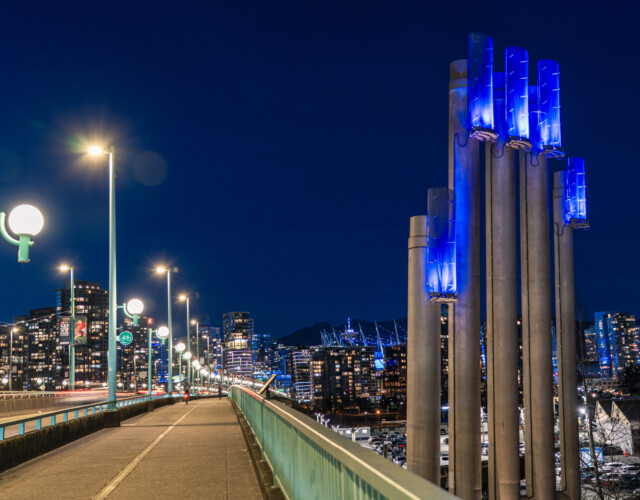
Since the False Creek Neighbourhood Energy Utility (NEU) opened in 2010, sewage heat recovery has moved from a handful of global examples to a growing North American project pipeline, with seven systems now operating or under development Metro Vancouver and in cities including Toronto, Markham, and Denver. The NEU helped make these projects easier to understand, finance and replicate by showing that wastewater heat recovery could work at district scale. This was by design. As Derek Pope, Associate Director, explained to me, the facility plays another role as “a learning hub to enable others to make their own investments in low-emissions energy”.
“A learning hub to help enable others make their own investments in low-emissions energy and sewer waste water recovery”
Derek Pope
Associate Director
From Olympic showcase to urban heating model
Vancouver’s False Creek Neighbourhood Energy Utility was first built to provide low-emission heat to the Olympic Village, part of the city’s effort to host the world’s most sustainable Olympic Games. The project received an innovation grant and loan to help fund the initial capital costs. It now provides low-emissions heat for near 50 buildings, while offering other cities a working example of both the opportunity and the practical challenges.
False Creek Neighbourhood Energy Utility
False Creek Neighbourhood Energy Utility
False Creek Neighbourhood Energy Utility
False Creek Neighbourhood Energy Utility
False Creek Neighbourhood Energy Utility
False Creek Neighbourhood Energy Utility
False Creek Neighbourhood Energy Utility
False Creek Neighbourhood Energy Utility
False Creek Neighbourhood Energy Utility
False Creek Neighbourhood Energy Utility
False Creek Neighbourhood Energy Utility
False Creek Neighbourhood Energy Utility
False Creek Neighbourhood Energy Utility
False Creek Neighbourhood Energy Utility
False Creek Neighbourhood Energy Utility
False Creek Neighbourhood Energy Utility
False Creek Neighbourhood Energy Utility
False Creek Neighbourhood Energy Utility
False Creek Neighbourhood Energy Utility
False Creek Neighbourhood Energy Utility
Making clean heat easier for buildings
By centralizing heating equipment at the False Creek Energy Centre, the facility also simplifies buildings. New buildings do not need their own large on-site heating systems; each one connects to the NEU through a pair of compact heat exchangers. For a 10- to 15-storey building, each heat exchanger can be about the size of a large suitcase. Less equipment on site can also mean lower maintenance needs, simpler operations and an easier path for building retrofits.
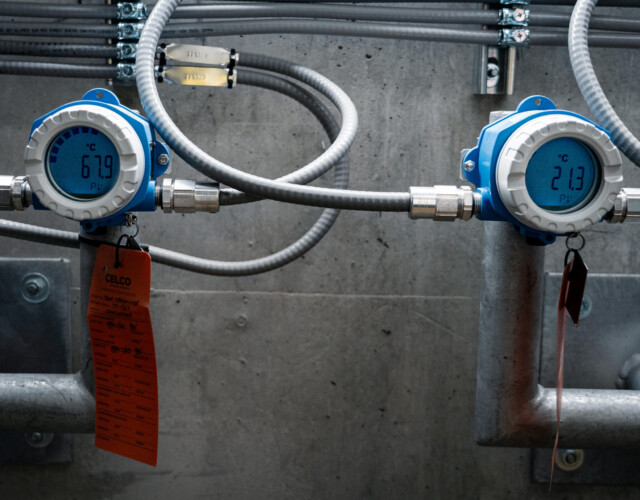
To generate that heat, the centralized facility uses heat pumps to draw heat from wastewater at roughly 20°C and upgrades it to produce hot water around 70°C. That hot water is then pumped to buildings for space heating and domestic hot water. Natural gas boilers at the centralized plant provide peaking and backup when needed, helping ensure reliable service through the year.
The Details
Vancouver
Location
2024
Capacity expansion
9.6 MW
Heat recovery capacity
47
Buildings connected
70%
Renewable heat share
10,000
Residents served
The next challenge is finding more heat
Planned development within the NEU service area could see the floor area served by the NEU nearly triple at full buildout. To meet the growing energy demand as well as support a transition to 100% renewable energy, additional energy sources will need to be added over time. The 2024 expansion of the sewage heat recovery system, which added 6.6 MW of capacity, is a great start but work is already underway to map out the utilities next investments in low carbon energy. Studies have begun to better understand the local waste heat resources which include data centres, industrial waste heat, and other sewer lines. Heat storage, electric boilers and bioenergy are also being assessed to expand supply.
The False Creek NEU shows what municipally owned low-carbon utility infrastructure can achieve when paired with innovation and operational excellence. The NEU remains a useful model because it is still evolving. The next phase is not just about adding capacity, but about showing how cities can identify, connect and manage more sources of low-emissions heat.